Tuesday, October 22, 2024

Presidential Election Is 'Confusing' Deposit Pricing


By Ray Birch

LAKE FOREST, Ill.—The nation is experiencing an economic period that’s testing the deposit pricing skills of even the most accomplished CFOs, one economic research firm is saying.

And the reason: erratic movements in deposit pricing since COVID, and a presidential election whose outcome could swing rates two ways.

“The pending election is confusing deposit pricing for both user and FI,” said Elizabeth Hamlin, financial analyst at Moebs $ervices. “The two candidates for the White House, plus House and Senate races, tell the story. The average American is confused about who is saying what and who will win. And, this confusion lies with even those who run depositories and determine deposit pricing.”

ecconomy

Hamlin pointed out that 12-month CD rates have dropped 80 basis points in the past year, while three-month CD rates have increased 64 BPs.

Screenshot 2024-10-19 081631

“The depository saver is confused,” Hamlin said. “For some savers this money is going short with the hope rates will rise after the election, while other savers are going long because their view is rates will go down. Thus, deposit pricing chaos.”

The latest Moebs $ervices Deposit Rate Survey, from October 2024, representing 74.8% of financial institutions with consumer deposits, provides insights, Hamlin said.

“After more than two years, the U.S. Treasury yield curve is no longer inverted,” Hamlin explained. “The deposit yield curve is a different story, neither normal—upward sloping nor inverted. Deposits are in transition to a new norm.”

A year ago, rates started to move from an inverted state, with 12-month and 24-month CDs dropping the most and leading the way lower.

Rates Have Zig-Zagged

“Yet, the conclusion of many a year ago was deposit rates would be headed upward,” said Hamlin.

However, over the last three years, most deposit rates have zig-zagged, Hamlin said

Savings, now an M1 transaction account, along with MMDAs and 48-month CDs, stayed the same.

In contrast, usage—volume in each category— increased significantly for 36-, 48-, and 60-month CDs. Usage dropped for other transaction accounts with interest and free checking dropping.

“This is unusual,” noted Hamlin.

Usage for one- and 24-month CDs, along with money market deposit accounts and free checking, was minimal.

Hamlin addressed pricing differences among deposit types.

Hamlin

Elizabeth Hamlin

“The BPs differences are pronounced,” noted Hamlin. “The 12- and three-month CDs show a wide variance and are strikingly different. As Fed Chair (Jerome) Powell decreased fed funds by 50 BPs, depositories increased the thee-month CD sharply while lowering the 12-month CD even more—and both moved more than 50 BPs.”

In contrast, three-, four- and five-year CDs, along with MMDAs and interest checking, show little change.

“Rates are on the move. Depositories can look to the Treasury rates for guidance in how to protect funds without overextending,” Hamlin said.

Contrasting Treasury Rates

T-rates also decreased with the fed fund rate adjustment in September, Hamlin noted.

“The result is a normal yield/rate curve for fed funds up to one-year bills, then falls for longer terms,” Hamlin said. “Also, CDs as a percentage of T-rates rose for all by 5%, as banks, credit unions, thrifts, and fintechs move to keep deposits more closely mirroring the Treasury rates. The Fed now has a good grip on money supply and is moving to align all government rates to a normal yield curve. Depositories are aligning closer to the Fed more than ever.”

Monday, October 21, 2024

Letter to Credit Unions (24-CU-02) Board of Director Engagement in Cybersecurity Oversight


NCUA Express


Thursday, October 17, 2024

Steve Rick -TruStage Chief Economist - Here’s a look at how credit unions performed by category,

 10/16/2024 06:37 pm

MADISON, Wis.—Credit union loan balances rose 3.8% in the year ending in July 2024, slower than the 11.4% pace reported in the year ending in July 2023, due to higher interest rates, tight credit union liquidity and strong competition from finance companies, according to TruStage’s newest Trends Report.

The data also show the CU annual membership growth rate has slowed to a point not seen since the tail end of the Great Recession in November 2011.

Highlights from the September Trends Report, which is based on CU performance through July:

  • The U.S. money supply increased $620 billion during the last year, boosting credit union deposit growth rates
  • Credit union new-auto loan balances fell 3.6% year to date, significantly below the 8% expected during a healthy labor market
  • Credit union first mortgage loan originations dropped 8.9% in the first half of 2024 compared to the first half of 2023

Here’s a look at how credit unions performed by category, with analysis by TruStage Chief Economist Steve Rick.

T total lending

Total Lending

Credit unions of all asset size reported slower loan growth this year than last year, especially in the direct and indirect auto loan categories. Bank lending has also been weak over the last year with loan balances rising only 2.3%, below their long-run average of 6%.

“Slower than normal lending growth rates are one of the ‘long and variable lags of monetary policy’ that Federal Reserve Chairman Jerome Powell likes to discuss at his press conferences,” noted Rick.

Credit union loan balances grew at a 2.7% seasonally-adjusted, annualized growth rate in July, below the 5.9% pace set in July 2023, and significantly below the 19% pace set in July 2022, when credit unions picked up market share in the auto loan space. Over the long run, credit union loan balances rise on average 7% per annum.

“We are forecasting slightly better credit union loan growth for 2025 (around 5%) as lower interest rates encourages members to borrow and spend,” Rick said.

T consuemr installment credit

Consumer Installment Credit

Credit union consumer installment credit rose 0.7% during the 12 months ending in July, the slowest pace since January 2012, and below the 3.1% pace reported by all other lenders. Bank consumer credit growth rates have also been declining for the last two years as liquidity was in short supply. Credit union credit card balances grew at a 6.6% seasonally-adjusted annualized growth rate in July, below the 10.3% pace reported in July 2023, the report states.

“Weak deposit growth at many credit unions is reducing the supply of credit while higher borrowing costs are reducing the demand. July’s credit card seasonal factors usually add 0.62 percentage points to the underlying trend growth rate as people venture out on vacations. Falling gas prices and consumers slowing their spending on services will keep credit card loan growth around its long run average of 5.5% for the remainder of the year,” the report adds.

T vehicle laons

Vehicle Loans

Credit union new-auto loan balances fell 0.3% in July, below the 0.1% gain reported in July 2023. Higher interest rates and increased competitive pressure from captive finance companies has reduced new auto lending at credit unions. On a seasonally-adjusted annual rate new-auto loan balances fell 5.7% in July, the slowest pace since July 2011.

“The month of July is historically in the middle of the May through October new-auto lending season. Credit union new-auto loan balances fell 3.6% year to date, significantly below the 1.9% gain reported during the first seven months of 2023, and below the 8% long-run average expected during a heathy labor market,” wrote Rick.

Vehicle sales rose to a 15.8 million seasonally-adjusted annualized sales rate in July – up 4.3% from June but down 0.6% below the 15.9 million sales pace set in July 2023.

“Affordability issues during the last few years, caused by both high vehicle prices and high loan interest rates, has kept vehicle sales below its 16.5 million long run equilibrium. The increased supply of vehicles, however, has reduced new car prices 1.2% during the last 12 months while used vehicle prices are down 10.4%. Lower interest rates during the next few months and falling vehicle prices will ensure that new-vehicle sales rise towards the 16.5 million long-term equilibrium in 2025. We are therefore forecasting credit union new-auto loan balances will rise 2% next year and used auto loan balances will rise 4%,” the report states.

T real estate

Real Estate Information

Credit union fixed-rate first mortgage loan balances rose 0.1% in July, below the 0.3% increase reported in July 2023, but have declined 0.3% during the last year. Credit union fixed-rate first mortgage loan balances fell 0.4% at a seasonally-adjusted annual rate in July, the eighth consecutive month of decline.

Adjustable-rate first mortgage balances fell 0.6% in July, below the 0.6% gain reported in July 2023, but have increased 16.8% during the last year. Credit unions originated $49.1 billion first mortgage loans in the first half of 2024, an 8.9%% decrease below the $53.9 billion in originations in the first half of 2023, and a remarkable 69% decrease below the record $156.8 billion in originations in the first half of 2021.

Credit unions then proceeded to sell off 33.7% of those originations into the secondary market, above the 22.1% sold off in the first half of 2023. The stage is set for a better second half of 2024, due to the recent fall in mortgage interest rates to around 6% and a rising supply of home for sale.

“We expect both purchase and refinance mortgage activity to accelerate during the next six months. The contract interest rate on a 30-year fixed-rate conventional home mortgage fell to 6.85% in July, down from 6.92% in June and slightly above the 6.84% reported in July 2023. We expect long-term interest rates to fall this winter as the Federal Reserve winds down their Quantitative Tightening program; reducing their purchases of Treasury bonds and agency mortgage-backed securities. Home prices rose 0.2% in July from June despite very low home affordability, according to the S&P Core Logic Home Price Index, and were up 5% on a year ago basis. Expect the pace of home price appreciation to slow as inventory begins to grow and many buyers have been priced out of the market. Lower interest rates will increase housing demand, but housing supply is expected to increase more. So, expect home price appreciation to slow to around 2-3% over the next year,” Rick said.

T savings and assets

Savings And Assets

Credit union savings balances fell 0.3% in July, above the 0.9% decrease in balances reported in July 2023. July is normally the weakest month of the year for saving balance growth due to seasonal factors shaving off -0.6% from the underlying trend growth. These seasonal factors include things like vacation spending and auto loan down payments. During the last 12 months, savings balances rose 3.8%, below the pre-COVID 19 pandemic average of 6.7%.

With credit unions raising the interest rates paid on saving deposits, the interest paid by credit unions should have raised deposit balances by around 1.9%. Moreover, with credit union memberships growing 1.2% during the last 12 months, deposit balances should have increased as new members opened checking and savings accounts and deposited new money into the credit union.

“Therefore, savings per member is currently rising at a slow 2.6% pace (3.8% - 1.2%) below the 4.2% long run average. The weak credit union savings growth rates are partly explained by the national Personal Savings Rate (savings as a percent of disposable income) coming in at 3.3% recently, according the Bureau of Economic Analysis, almost 1/2 the long run average of 6%. According to NCUA call report data, credit unions of all sizes reported weak savings growth rates during the last year as compared to long run averages. We expect credit union savings balances to rise 5% in 2024, and then accelerate to 6% in 2025,” the report states.

T CUs and members

CUs And Members

Credit union memberships grew 0.1% in July 2024, below the 0.4% reported in July 2023, due to a significant reduction in auto loan originations and slower job growth. On an annual growth rate basis, memberships are up only 1.2% in the year ending in July 2024, below the 4.3% pace set in the year ending in July 2023. This 1.2% pace is the slowest since the tail end of the Great Recession in November 2011. The membership growth slowdown was partially driven by the 2.4 million jobs gained during the last year, according to the Bureau of Labor Statistics, which is below the 3.2 million jobs gained in the year ending in July 2023.

Tuesday, October 15, 2024

The National Council of Firefighter Credit Unions (NCOFCU) Honors Bob Summey with the Lifetime Achievement Award and John Hoolahan with the Volunteer of the Year Award at the San Antonio Conference

San Antonio, TX – October 4, 2024 - The National Council of Firefighters Credit Unions (NCOFCU) is proud to announce the awarding of the prestigious Lifetime Achievement Award and Volunteer of the Year Award. 

Lifetime Achievement Award 


Mr. Summey, the recipient of the Lifetime Achievement Award, has been a cornerstone of the Charlotte Fire Dept CU since 1969. His 55 years of service, marked by exceptional leadership, vision, and unwavering dedication, have been instrumental in the significant growth and success of the credit union. His tenure as the Chairman of the Board from 1973 to 2021 has been a period of transformative leadership, guiding CFDCU to its current position of strength and prosperity.

Volunteer of the Year Award


John Hoolahan has been an integral part of the New Orleans Firemen’s Federal Credit Union for over 30 years, serving on the Board of Directors with unwavering dedication and commitment. His leadership, currently as the Vice Chairperson, plays a pivotal role in steering the strategic direction and governance of the credit union. His impact is felt in every decision made, ensuring the financial well-being of the members. Furthermore, Hoolahan is an active participant in the Compensation Committee, Facility & ERM Committee, and the newly established Community Development Committee, where his insights and experience contribute to the continued success and growth of the credit union.

Come join us in Key West, Florida, 9/22-25/2025


Tuesday, October 1, 2024

Americans Aren’t Ready For Retirement. Credit Unions Can Help.

A new YouGov study indicates only one-third of consumers expect to have enough money saved for retirement by age 65, and virtually no one is confident about their plans once they stop working.

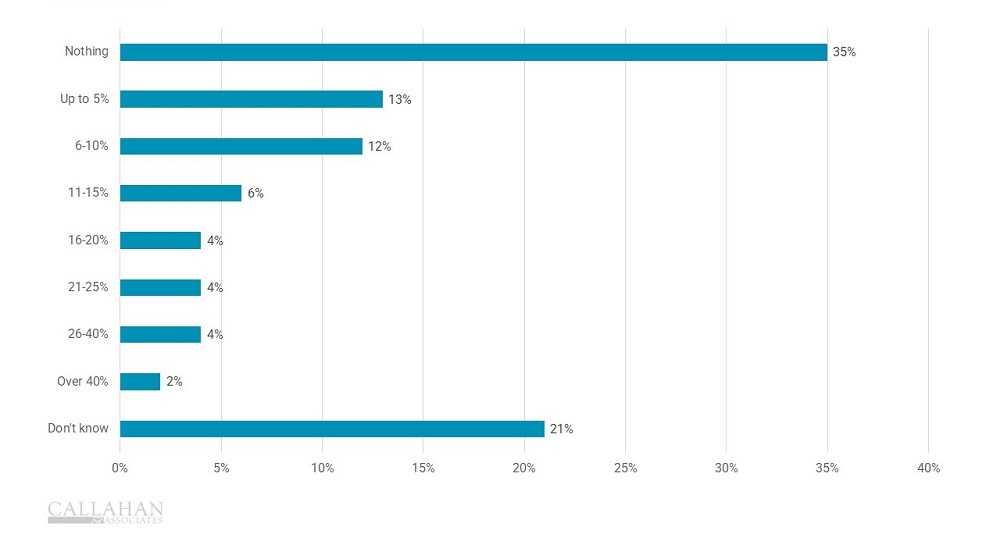
PERCENTAGE OF AMERICANS’ ANNUAL INCOME SAVED FOR RETIREMENT
FOR U.S. CONSUMERS
© Callahan & Associates | CreditUnions.com

With retirement preparation so varied across different age groups, credit unions have plenty of opportunity to assist members of all ages with retirement-planning services. SOURCE: YouGov’s 2024 retirement report.

Americans want to retire by age 65 — if not sooner. Unfortunately, a majority lack the savings to do so, and a substantial percentage aren’t confident about their financial security once they stop working, according to a 2024 report from YouGov. The average credit union member age has hovered in the mid-40s for decades, and the study’s findings indicate an opportunity for credit unions to lean into retirement-planning services.

Strategic Insights

  • Low savings rates: Roughly one-third of Americans believe they’ll be able to retire at age 65, but only 36% believe they’ll have enough independent savings to do so, according to YouGov’s 2024 retirement report. Forty percent of those surveyed reported they aren’t confident about financial security for retirement.

 Lack of confidence: The youngest members of the baby boom generation are rapidly approaching retirement age, but 33% aren’t confident they’ll be ready. That figure jumps to approximately 48% for Gen X and millennials.

  • Education counts: Regardless of age, those with post-graduate degrees are most confident about their retirement finances, but at 49%, even that doesn’t represent a majority. Respondents with a two-year degree were least confident, though high school graduates and those with some college experience had similar responses.

  • Taking risks: A majority of those younger than 55 are more likely to take risks with their retirement planning, including riskier ventures with the stock market and cryptocurrencies.

  • An opportunity for credit unions: Roughly 20% of the general population is currently working with a retirement planner or financial advisor.

Wednesday, September 25, 2024

Consumers Want More and More from Mobile Banking. If You Don’t Keep Up, They Could Walk


Research by MX reports that consumer expectations for your banking app just keep getting higher. And dissatisfied users will likely jump to another app (and another bank) that ticks more boxes. How can you stay ahead in the app game?

Mobile banking apps have become table stakes for banks and credit unions, especially among Millennials and Generation Z. Research from MX earlier this year indicated that a decent mobile banking app is a must-have for nearly one in four consumers starting a relationship with a financial institution.

MX research also shows that 80% of consumers have a payment app, such as Venmo, PayPal or Cash App on their phone. In addition, 77% have a bank or credit union mobile banking app, 48% have a credit card app, 25% an investment or retirement savings app, and 17% an independent app to help manage their finances. Nearly half maintain three or more financial apps on their devices.

Now a new round of MX research indicates that the quality of the mobile banking app offered by a consumer’s banking provider can be the basis of a tighter relationship — or break the inertia that traditionally kept unhappy customers onboard.

MX’s study, “The Missing Link: Where Banks May Be Failing Consumers,” found that 57% of people surveyed said they were either not likely or very unlikely to have an account with a financial provider that offers a bad mobile experience.

“Everyone uses mobile to do their finances in some form or fashion today,” says Jessica Kendall, director of content at MX. “It’s the prevalent medium of choice and you have to have a solid app as a foundation to get consumers — and keep consumers.”

Merely enticing new customers with apps isn’t enough — “wow” doesn’t last long. Today, providers have to keep up innovation to hold onto consumers.

“Simply having an account doesn’t mean they are using the mobile app,” according to the MX study report. “It also doesn’t mean they are using the mobile app if the experience gets worse. 65% of consumers say they would stop using the app if the mobile experience changes for the worse.” [Deep Dive: Offer ‘Test Drives’ of Mobile Banking Apps for a Marketing Advantage]

We spoke with both MX about the study’s findings and with Keynova Group about that firm’s latest Mobile Banker Scorecard study, which examines the offerings of 17 major retail banking providers.

Continue reading >

What should your credit union budget for in 2025?

As we enter the fourth quarter, many credit union leaders are starting to turn their attention toward planning for 2025. With a myriad of options and new technology, it’s crucial to prioritize services that set credit unions apart while encouraging growth.

In this article, we explore several key areas credit unions should consider when preparing their budgets for the coming year.

Expanding membership

One significant trend shaping the financial landscape is the exodus of big banks from rural communities. This presents a golden opportunity to expand membership to new communities.

However, this expansion doesn’t necessarily require traditional brick-and-mortar branches. Credit unions can leverage technology to provide services efficiently and cost-effectively. Some alternative service delivery methods include:

  1. Interactive Teller Machines (ITMs): These advanced ATMs allow members to interact with a live teller via video, providing a personal touch.
  2. Expanding ATM access: Branded ATMs, such as full-service drive-thru ATMs in parking lots of busy businesses, can play a crucial role in serving members’ basic banking needs and attract new members.
  3. Smaller, modern modular branches: These affordable, portable branches are versatile and durable and offer a quick and efficient way to market for credit unions moving into new areas or those wanting to cut costs and close traditional branches.
  4. Digital banking services: Beyond the mobile app, technology advances now allow credit unions to offer digital banking solutions that include live video, chat and virtual assistants’ members can access through QR codes.

By incorporating these technologies, credit unions can extend their reach without the substantial overhead of traditional branches, allowing them to serve members in new areas more efficiently. And by partnering with a reliable vendor expanding ATM access or adding ITMs, and digital banking solutions are affordable and don’t need to be time consuming for staff.

Enhancing branch efficiency with teller cash recyclers

For credit unions maintaining physical branches, investing in Teller Cash Recyclers (TCRs) can significantly improve operational efficiency. TCRs offer several benefits such as improved cash security, increased accuracy and speed, and freeing up branch staff to focus on personalized member service and cross-selling products and services.

Embracing virtual banking

To stay competitive, credit unions should consider incorporating advanced interactive technologies into their service offerings in 2025. Beyond the mobile app or the ITM, there are a variety of digital solutions like virtual assistants, mobile chat features, and QR code-based marketing available today.

Virtual assistants provide members with easy access to get answers to their questions 24/7. QR code marketing can generate faster connections with members. These handy codes can be used to quickly direct members to specific product pages or applications, providing instant access to promotional offers or facilitate easy sign-ups for new services.

However, QR codes aren’t just useful for marketing. They can also link to virtual branch solutions, which provide ITM-level capabilities without substantial capital investment. Some benefits include:

  • Video calls: Give members the personalized assistance they crave without having to come into a branch.
  • Live chat: Allow credit union representatives to offer financial advice or answer questions.
  • Translation services: Provide an easy way to speak to members that may not speak English as a first language without any miscommunication issues.
  • Advance level marketing: By using a customized QR code, marketing can direct consumers to loan applications and easily track the effectiveness of promotions.

By adopting these technologies, credit unions can enhance member engagement and provide convenient, 24/7 access to services.

Diversifying income streams

As interest rates remain higher, it’s prudent for credit unions to add non-interest avenues of income to their portfolio. Partnering with vendors that offer merchant services, smart safes and ATMs can open new revenue streams while providing additional services to business members, attracting new accounts and deepening existing relationships—without additional work for staff.

Leveraging NCUA grants

Low-income designated credit unions have a unique opportunity to access grants through the National Credit Union Administration (NCUA). These grants can be instrumental in adding ITMs or expanding ATM access—helping to meet the needs of a growing number of citizens.

Some independent ATM operators even offer valuable assistance in this area such as helping to navigate complex paperwork and, of course, handling the ongoing operation of ATMs and ITMs. This support can make advanced technologies more affordable for credit unions with limited resources.

As credit unions prepare their budgets for 2025, it’s essential to balance traditional services with innovative technologies and partnerships. By focusing on expanding into underserved areas, embracing interactive technologies, improving branch efficiency, diversifying income streams and leveraging grants, credit unions can position themselves for growth and enhanced member service in the coming year.

Remember, the key to successful budgeting lies in aligning financial decisions with the credit union’s core mission of serving members. By carefully considering these investment areas, credit unions can ensure they’re not just keeping pace with the changing financial landscape but leading the way in member-focused banking services.

Tuesday, September 24, 2024

Financial Advisors Pushed Aside

ARLINGTON, Va.— A new report suggests more consumers are turning to fintech apps rather than financial advisors to manage their money, and that the trend will only increase as artificial intelligence becomes more mainstream.

“Fintech apps have simplified financial management and their capabilities are expected to be amplified with AI,” Capterra stated in releasing its analysis.

According to Capterra’s 2023 Fintech Survey of more than 870 consumer fintech users, 60% of respondents now seek advice from personal finance tools before reaching out to financial professionals. Furthermore, 64% of fintech users feel that these tools have significantly reduced their reliance on financial advisors, Capterra said.

Rapid Advance

“Fintech has rapidly advanced within the last few years, changing how traditional financial services are offered and how consumers manage their finances,” Max Lillard, senior finance analyst at Capterra, said in a statement. “While fintech won’t make advisors obsolete anytime soon, financial professionals need to adapt to changing consumer behavior and play up their strengths by augmenting their services.”

Capterra Chart

The Survey Findings

Capterra reported the survey found:

  • Millennials and Gen Z account for over half (55%) of fintech app adopters. They are empowered by user-friendly interfaces, data visualization tools, and real-time notifications, Capterra said.

  • The most popular solutions for fintech users include banking (82%), payments (63%), and personal finance management tools (57%).

  • Overall, 73% of fintech users actively use between two to five tools, which include everything from do-it-yourself investing apps to AI-powered planning tools.

  • Despite the high adoption of these apps, some fintech users still prefer an accountant to handle tax planning and preparation (47%), estate planning (42%), auditing and assurance services (34%), and business consulting (28%), Capterra said.

  • A “whopping” 89% of fintech users say they’ve encountered challenges while using apps. Security is the top concern, with 41% worried about the safety of their personal and financial information. Users also encounter hidden costs and technical issues, Capterra said.

Monday, September 23, 2024

Expanding financial access: Why prepaid cards are a valuable addition to your credit union’s product portfolio


by Crystina Duran, Envisant

Experts are predicting the prepaid card market will be valued at more than $10.5 trillion globally by 2027 as usage continues to increase (World Metrics). This data reveals the ongoing relevance of prepaid cards and points to their increasing value as part of a credit union’s portfolio. Prepaid cards hold a strong position in financial wellness and inclusion that makes them ideal for building trust, growing a credit union’s market, and strengthening member relationships while diversifying revenue streams.

Grow member trust while supporting financial wellness

Prepaid cards are well-known as valuable tools that support financial wellness. They are a popular tool for budgeting. Among cardholders, 54% use prepaid cards to help them budget and 66% use them to avoid overspending (Pew Trusts). Prepaid cards also offer many other features that help build trust and support financial wellness.

  • Convenience and security: Prepaid cards with advanced protections against fraud are much safer to use than cash. They also aren’t tied to the cardholder’s checking account, so this information stays secure while cardholders enjoy the flexibility of being able to shop online or where cash isn’t accepted.
  • Real-time purchase tracking: Prepaid cards give users the ability to easily track their day-to-day purchases so they can better review their expenses and spending habits to plan and manage their budgets more effectively.
  • Cost-effective: Prepaid cards don’t have interest rates or overdraft fees so cardholders have fewer unplanned expenses to interfere with their budgeting.
  • Direct deposit: This prepaid card feature offers fast, direct access to paycheck funds, providing a better alternative to expensive check-cashing services.
  • In-app and online card management: These digital options for card management help cardholders have more control over their funds by providing them easy access to their accounts at any time. Cardholders can monitor transactions, budget, freeze compromised cards, set up fraud alerts, and more.

Grow your credit union through financial inclusion and literacy

Prepaid cards play a key role in promoting financial inclusion, both by offering underserved communities a means of participating in the digital economy and by helping them gain a stronger financial position through easier budgeting. Credit unions can encourage cardholders to make the most of prepaid cards as a financial wellness tool through educational offerings like workshops or informative handouts that increase financial literacy. When combined with proactive efforts from credit unions, prepaid cards can help grow financially strong members who are empowered to take advantage of other financial services available through their credit unions.

Strengthening member relationships and diversifying revenue streams

Prepaid cards, especially reloadable cards, can serve as a valuable tool for business growth. These accessible budgeting tools can help attract new members, foster loyalty among existing members, and provide an ongoing income for credit unions.

Conclusion

Prepaid cards thus provide a unique opportunity for credit unions to grow through advancing financial inclusion and member financial well-being. By taking proactive steps to help cardholders make the most of prepaid tools, credit unions can effectively implement prepaid cards as a key component of their product portfolio to support member and credit union success.

To learn more about how Envisant, an award-winning CUSO, can help your credit union develop a prepaid card program to support financial wellness, visit https://www.envisant.com/solutions/prepaid/ or contact the Envisant sales department at 1-800-942-7124.

Emergency Response Times Soar by 15 Minutes in New York City as EMTs Abandon the Profession

New York City’s emergency response times have more than doubled over the last decade, according to a new report by the New York City Comptro...