“Celebrating 25 Years of Service: Unite, Ignite, and Empower”
“We train and support volunteer leaders of credit unions serving first responders to run stronger, more effective institutions.”
“Great things happen when credit unions serving first responders come together. Our face-to-face and on-line interaction is the platform where collaboration begins, and GREAT ideas are generated.”
NEW YORK–Credit unions are getting some national attention for their rates on auto loans.
Under the headline “Auto-Loan Interest Rates are Skyrocketing:
No One Told Credit Unions,” the Wall Street Journal noted credit unions
charged an average interest rate of 5.94% for used cars in third
quarter, while banks were charging an average rate of 8.36%.
“Auto lending is a bread-and-butter business for credit unions, and it isn’t unusual for them to beat the competition. But the extent to which they are doing so when rates are rising and other lenders are pulling back is drawing attention across the consumer-lending markets,” the Journal stated.
The
gap between the CU average of 5.94% and the bank average of
8.36%--which is based on data from credit-reporting
firm Experian--widest in at least five years, according to the Journal
report.
For new cars, credit unions charged 4.43%, versus banks’ 6.06%, the report added.
“They
kept rates low when the rest of the market just exploded,” John Toohig,
who trades credit unions’ auto loans as head of whole-loan trading at
Raymond James, told the Journal.
One Borrower’s Story
The
report profiled one person, Nick Honko, a doctor in Charleston, S.C.,
who said he had shopped around at banks when he was buying a new car
over the summer, but “credit unions were just a ridiculous deal,” he
said.
Honko got a 2.99%, 84-month loan through Carolina
Cooperative FCU. He told the Journal he initially was using a credit
card to make his loan payments and collect cash-back rewards, but CCFCU
later started charging for that option. Honko told the Journal the rate
is so low that he earns more interest from stowing cash in his
high-yield savings account that currently earns 3.3% than he pays in
interest on the auto loan.
Why CUs Have ‘Flexibility’
William
Hunt, senior analyst at Callahan & Associates, told the Journal
that unlike finance companies and the lending arms of auto makers,
credit unions typically don’t pool auto loans into bonds and sell them
to investors.
“Keeping loans on their balance sheets gives them flexibility to veer away from the rest of the market,” the Journal said.
Credit union advocates also say that their lack of shareholders means they can focus on customers instead.
The
Journal also noted that credit unions now have a bigger share of the
auto-finance market than any other type of lender, closing the third
quarter with 28% of all auto financing, up from 20% a year earlier,
according to Experian.
WASHINGTON–The National Association of Realtors has released its
forecast for home sales in 2023, including identifying the top real
estate markets it said deserve to be watched, where rates are headed and
what will happen with rents.
Lawrence Yun, the NAR’s chief economist and senior vice
president of research, is forecasting 4.78 million existing homes will
be sold, that prices will remain stable, and that Atlanta will be the
top real estate market to watch in 2023 and beyond. Yun offered his
forecast during NAR's fourth annual year-end Real Estate Forecast
Summit.
Yun is predicting home sales will decline by 6.8% compared
to 2022 (5.13 million) and the median home price will reach $385,800 –
an increase of just 0.3% from this year ($384,500).
Some Gains, Some Declines
"Half
of the country may experience small price gains, while the other half
may see slight price declines," Yun said. "However, markets in
California may be the exception, with San Francisco, for example, likely
to register price drops of 10–15%."
Additional Predictions
Yun is expecting rent prices to rise 5% in 2023, following a 7% increase in 2022.
Yun said he expects foreclosure rates will remain at historically low levels in 2023, comprising less than 1% of all mortgages
Yun is forecasting U.S. GDP will grow by 1.3%, roughly half the typical historical pace of 2.5%.
After eclipsing 7% in late 2022, he expects the 30-year fixed
mortgage rate to settle at 5.7% as the Fed slows the pace of rate hikes
to control inflation. Yun added this is lower than the pre-pandemic
historical rate of 8%.
Top 10 Real Estate Markets to Watch
Separately, the NAR has identified 10 real estate markets that it expects to outperform other metro areas in 2023.
In order, the markets are as follows:
Atlanta-Sandy Springs-Marietta, Georgia
Raleigh, N.C.
Dallas-Fort Worth-Arlington, Texas
Fayetteville-Springdale-Rogers, Arkansas-Missouri
Greenville-Anderson-Mauldin, South Carolina
Charleston-North Charleston, South Carolina
Huntsville, Ala.
Jacksonville, Fla.
San Antonio-New Braunfels, Texas
Knoxville, Tenn.
"The demand for housing continues to outpace supply," Yun said. "The
economic conditions in place in the top 10 U.S. markets, all of which
are located in the South, provide the support for home prices to climb
by at least 5% in 2023."
The Formula
The NAR said it
selected the top 10 real estate markets to watch in 2023 based on how
they compared to the national average on the following economic
indicators: 1) better housing affordability; 2) greater numbers of
renters who can afford to buy a median-priced home; 3) stronger job
growth; 4) faster growth of information industry jobs; 5) higher shares
of the information industry in the respective local GDPs; 6) migration
gains; 7) shares of workers teleworking; 8) faster population growth; 9)
faster growth of active housing inventory; and 10) smaller housing
shortages.
Despite the attractiveness of their dividend yields, there are risks and limitations to what preferreds can do for a portfolio.
By Matthew Butler |
Source: Shutterstock.
To bolster investment yield, many credit unions hold preferred stocks
as part of their employee benefits pre-funding portfolios, but
preferred stocks aren’t for everyone, and credit unions should be leery
about having these securities in their portfolio. Despite the
attractiveness of their dividend yields, there are risks and limitations
to what preferreds can do for a portfolio, and the high yields they
offer aren’t sufficient to justify investing in these securities.
What Is a Preferred Stock?
Preferred stocks are a class of equities that sit between common
stocks and bonds. Like stocks, they pay a dividend that the company is
not contractually obligated to pay. Like bonds, their dividends are
typically fixed and expressed as a percentage rate. Preferred
shareholders receive preference over common stockholders, but in the
case of a bankruptcy bond holders would be paid before preferred
shareholders. Unlike common stock shareholders, who benefit from any
growth in the value of a company, the return on preferred stocks is a
function of the dividend yield.
It is the dividend yield that makes preferred stocks so alluring on
the surface. As of Sept. 30, 2022, the 30-day yield on the iShares
Preferred Stock Index Fund (PFF) was 5.11%, though the fund’s total
return year-to-date through Sept. 30, 2022, is -17.13%.
Why Do Companies Issue Preferred Stocks?
Interest payments made to bondholders are tax deductible to the
issuing corporation. Preferred stock dividend payments are not tax
deductible to the issuing corporation. This makes issuing preferred
stocks much more expensive for a company than issuing bonds.
Most companies with solid credit ratings don’t issue preferred
stocks. Preferred stocks are generally too expensive a form of capital
for strong credits. Why then, would a company issue preferred stock? The
answers aren’t exactly reassuring.
A company might issue preferred shares if they are having trouble
accessing other capital-raising options. Again, because it is cheaper
for a company to issue bonds versus preferreds, a corporate treasurer
may only resort to issuing preferreds if the company wants to have the
flexibility to suspend dividend payments, is finding it difficult to
find buyers for its debt, cannot find buyers for lower-dividend common
stock, or would suffer a credit downgrade if additional debt obligations
were added to its balance sheet.
Some companies issue preferred stock for regulatory reasons. For
instance, regulators might limit the amount of debt a company is allowed
to have outstanding. There may also be other regulatory reasons for
issuing preferred stocks. In October 1996, for example, the Federal
Reserve allowed U.S. bank holding companies to treat certain types of
preferred stocks as Tier 1 capital.
Preferred stock dividends are paid at the discretion of the company
and can be suspended at any time. Studies have found that about 6% of
preferred-stock issuers defer or cancel dividend payments over a 10-year
period. Conversely, bond interest payments are contractual obligations,
and failure to pay bond interest payments is a serious offense and sets
the wheels in motion for default and reorganization.
Who Owns Preferred Stocks?
The main buyers and holders of preferred stocks are corporations.
This is because when a company receives a dividend payment from another
company, the receiving company can deduct most of that dividend from its
taxes, a benefit that is not available to individual investors. Since
preferred shares usually have large dividend rates, corporations like to
buy them, which leaves a rather small portion of the original issue
available for outside investors. This makes preferred stocks less liquid
than common stocks.
Credit Quality
While not all preferred stocks are in the junk-bond category, they
seldom are highly rated credits. Consider the holdings of PFF as of
Sept. 30, 2022. Only 2.5% were rated AAA (the highest investment grade),
and only about 3.6% were rated A or higher.
Poor Performance in Times of Crisis
In a crisis, preferred stocks can be more volatile than common
stocks. Preferred stocks’ performance in market downturns demonstrate
that they come with much higher risk profiles than most
income-generating securities. Aside from the technology correction in
the early 2000s, when preferreds held up relatively well, preferred
stocks have typically suffered double-digit losses during market drops.
In 2008, for example, the ICE BofA Fixed Rate Preferred Total Return
Index dropped more than -25%. When COVID roiled the markets in early
2020, preferred stocks lost about -23%, on average. And again, the
iShares Preferred Stock Index Fund (PFF) is down over -17% year-to-date
through Sept. 30, 2022.
Thanks in part to their poor performance during market drawdowns,
preferred stocks have generally failed to generate high enough returns
to offset their risks. Over the past 15 years, preferred stocks have
shown about 94% of the volatility of stocks while generating lower
returns than both investment-grade and high-yield bonds. As a result,
Sharpe ratios for preferred stocks have lagged those of most other
income-generating asset classes over the past 15 years.
Preferred stocks also present much greater exposure to default risk
than even high-yield bonds. During the period 2003-2011, for example,
which covers the period of the financial crisis, preferred stocks had
about three times the exposure to default risk as 1-10 year high-yield
bonds, and about twice that of 10-30 year high-yield bonds.
Call Provisions
Most preferred shares are “callable,” which means that the issuer has
the right to buy them back at a pre-set price. This could happen if the
company finds that it can sell cheaper conventional debt or common
stock with a lower dividend. This call feature virtually eliminates the
chance of a rally, because as an issuer’s outlook improves it is likely
to repurchase those high-dividend preferred shares at a fixed price. On
the other hand, there is little to prevent preferreds from sinking if
the issuer runs into difficulties and needs to cut dividends. The result
is a non-symmetrical return pattern where the upside is capped but the
downside is not. Said another way, the investor has the risk of a
long-duration product when rates rise, but the call feature puts a lid
on returns if rates fall. Thus, preferred stocks rarely trade much above
their issue price. Because almost all callable preferred stocks are
callable at par, there’s extremely limited upside potential if the
security is purchased at par, and virtually no upside if the call date
is near.
Preferred stocks are complex and come with a very distinctive set of
risks and limitation. Credit unions and individual investors alike,
would be wise to look elsewhere in their quest for income.
Matthew Butler
Matthew Butler is the Founder and Managing Principal of Elite Capital Management Group, LLC in Cheshire, Conn.
Last week’s blog featured one of the most common questions we’re asked when a credit union engages us in a strategic marketing relationship:
How long until this stuff starts working?
I realize, you probably need more perspective surrounding those questions regarding the speed of effectiveness of your credit union marketing plan.
Many factors can impact the answer to that question. However, the
answer “immediately” comes with the proper execution of digital
marketing. The question behind that question is, “but how much will it
cost?”
If a potential member types your credit union name into a Google
search, congratulations! You have already won their heart. They have
chosen you as their preferred provider and are trying to connect. This
means you will enjoy an extremely low cost-per-click with a high
conversion rate.
But if they type the name of your competitor into the search block,
then it will be that other bank or credit union (or maybe even a fintech
or predatory lender) that enjoys that extremely low cost-per-click and a
high conversion rate.
So, how long will it take to see results from my credit union marketing plan?
The game begins the moment a potential member types their problem or
your category into a Google search instead of your name or the name of
one of your competitors. Their screen is filled with financial
institutions making offers that will solve their problem.
If they see a name they recognize, the game is over in moments. But
if they don’t recognize any of the credit unions, banks, or fintechs
that come up, several of the options will get clicks.
Back to that other question: How much does that kind of result cost?
The cost-per-click is extremely high when you compete for unbranded
“category” keywords such as ‘auto loan’ or ‘debt consolidation.’
Yes, we advocate all of our clients have a sufficient budget for
executing a digital marketing plan, so you can be found in a potential
member’s time of need. Most importantly, we advocate for our clients to
allow us to build their credit union’s brand by digging in to identify
that with your team and executing your strategic and comprehensive
credit union marketing plan, so people think of them first and like them
the best when it comes to that final click.
Bo McDonald
From strat plans to rebrands, YMC President and CEO, Bo, is passionate about helping financial institutions come up with a winning formula. If you’re ready to go beyond the SWOT, you can email him at bo@yourmarketingco.com.
I’m often asked by credit unions that are looking to work with our
team this very question: “How long before I see my credit union
marketing start to work?” It’s either an innocent question that is on
their generic “must ask the marketing people” list, or it’s a red flag.
Good marketing isn’t an easy button or simple pill that will solve all
of your problems. However, if you truly want an answer to that question,
you have to ask yourself a handful of other questions to get a close
answer.
Does your messaging capture attention or is it easy to ignore?
Ask this, especially with your ideal member. Does your value
proposition (or lack thereof) sound like every other financial
institution? If you’re trying to attract everyone who can join, your
messaging is too vague to appeal to anyone.
Do your ads speak to a felt need, or are you answering a question no one was asking?
“We’re a not-for-profit financial institution.” That’s cool, but I
really want to know if you can help me get a loan when I don’t have
perfect credit. “We have good rates and good service!” That’s great, but
my hot water heater needs to be replaced fast so my family can take a
hot shower, and I don’t have savings to cover it. Can you help me? Stop
thinking about your value and think about your credit union’s value to
your ideal member. Speak to that.
Are you a known, trusted, and respected brand? We
are, but we’re the best-kept secret in our community! You answered yes,
but the hard truth is you’re not if your credit union is the best-kept
secret. There’s a reason the big banks continue to keep their market
share despite the follies of banks like Wells Fargo. They have brand recognition; your credit union does not. Good or bad, they have it.
How often does the average person need your products and services?
The average person will keep their checking relationship with their
primary bank for an average of 16 years. The stress of switching
checking accounts is too great to make a quick decision. Loans are
needed more often, but your credit union better appear to be considered
at the time when that person is looking. Or you better have great
branding (see #3). The rule of thumb is that the longer your product
purchase cycle, the longer it will take before your marketing delivers a
positive R.O.I.
In your category, what name will customers typically think of first and feel the best about?
Three of the largest banks hold slightly more than 80% of all consumer
deposits. Those are the names that will come to mind first. My guess is
at best (if you’ve knocked #3 out of the park) you may be in the top 10.
The answer to your question “how long before the marketing starts to
work” is answered with the five questions above. If you’re struggling
with those answers and getting a little heartburn, you’re not alone.
We’ve helped hundreds of credit unions in the past 15 years overcome
their obstacles and accelerate growth. Our unique, new client onboarding
process will help uncover your credit union’s brand weaknesses and
operational obstacles that are keeping your credit union marketing
from being effective – before you spend $1 on marketing. We ensure your
credit union will get the maximum ROI and serve your members well.
Bo McDonald
From strat plans to rebrands, YMC President and CEO, Bo, is
passionate about helping financial institutions come up with a winning
formula. If you’re ready to go beyond the SWOT, you can email him at bo@yourmarketingco.com.
Chairman: Michael McCormick V. Chair. San Diego Firefighters FCU 1st V. Chairman:David Lantrip Director Houston Firefighters FCU 2nd V. Chairman: Brian Kurzel V. Chair. Charlotte Fire Dept. CU Treasurer: Gene Benick Newark Firefighters FCU Secretary: Andy Doyle Director F&A CU Directors:Bonnie Sensing Exec. Admin. Nashville Firefighters CU, Michael Tobler Chairman NY Firefighters Bravest FCU, , John Cowin Chairman Syracuse Firefighters CU, Al Comeaux Chairman Baton Rouge CU, Associate Directors: Johnny Player Treasurer Akron Fire Police CU, Marc Sanders Director Boston Firefighters CU, Bob Whitaker Director Baton Rouge Firemens CU.
WASHINGTON—Following an upward revision to third quarter 2022 real
gross domestic product (GDP) and stronger-than-expected incoming
personal consumption data to begin the fourth quarter, the economy is
now expected to eke out positive growth of 0.4% in 2022 before entering a
modest recession in the new year, according to the December 2022 commentary from the Fannie Mae Economic and Strategic Research (ESR) Group.
The
ESR Group stated that it views the current rate of personal consumption
growth as unsustainable given the combination of a low personal saving
rate and an elevated ratio of consumer debt to personal disposable
income.
“With many cyclical indicators continuing to point toward
economic contraction, including an inverted yield curve, the ESR Group
forecasts 2023 GDP growth to be negative 0.5%, an improvement from last
month’s forecast of negative 0.6%,” Fannie Mae stated. “The ESR Group
then expects the economy to begin expanding again at a 2.2% annual
growth rate in 2024. Inflation, as measured by the Consumer Price Index,
decelerated again in November, and the ESR Group expects the Federal
Reserve to closely monitor historically stickier wage growth metrics to
help determine how long it should continue its restrictive monetary
policy regimen. With a recession predicted beginning in the first
quarter of 2023, the ESR Group notes as plausible a scenario in which
the Federal Reserve begins once again cutting the federal funds rate in
mid-2023.”
Slight Revision to Home Sales Forecast The ESR Group said it
has also “modestly revised” upward its total single-family home sales
projections for 2022 and 2023 to 5.72 million and 4.57 million units,
respectively, due to the recent “significant pullback” in mortgage
rates. The projection of a home sales decline in 2023 is due largely to
the expected economic slowdown and the fact that most mortgage holders
continue to have rates substantially below current market rates,
creating a disincentive to move.
In 2024, the ESR Group expects
home sales to rebound 14.7% to 5.24 million due to the expectation that
economic growth will resume and mortgage rates will stabilize following
an expected compression of the currently abnormally high spread between
the 10-year Treasury rate and the 30-year mortgage rate.
‘Will Run Out of Air’
“The economy caught its breath in the second half of 2022, but that
doesn’t change our expectation that it will run out of air in early 2023
via a mild recession,” said Doug Duncan, senior vice president and
chief economist, Fannie Mae. “While uncertainty still exists, a growing
set of signs, including an inverted yield curve, weakness in the
Conference Board’s Leading Economic Index, and a slowdown of
manufacturing activity, support our ongoing contention that the economy
is likely to contract next year. “We expect housing to continue to
slow, even though mortgage rates have come down recently,” Duncan
continued. “Home purchases remain unaffordable for many due to the rapid
rise in rates over the last year and the fact that house prices, though
certainly slowing and in some places declining, remain elevated
compared to pre-pandemic levels. Of course, refinancing is still not
practical for the vast majority of current mortgage holders, which we
expect will also continue to constrain mortgage origination activity.”
WASHINGTON—The Federal Reserve Board has adopted a final rule
that identifies benchmark rates based on the Secured Overnight
Financing Rate (SOFR) to replace the London Interbank Offered Rate
(LIBOR) in certain financial contracts after June 30, 2023.
The final rule was drafted with direction from the LIBOR
Act—which was included in the omnibus spending package passed earlier
this year and which was aimed at providing a uniform, nationwide
solution for replacing references to LIBOR in existing contracts that do
not have an adequate fallback provision.
In its statement, the
Fed said the final adopted rule is substantially similar to what was
proposed, with “certain clarifying changes made in response to
comments.”
The Changes
The changes include:
Restating the safe harbor protections contained in the LIBOR Act for
selection or use of the replacement benchmark rate selected by the Fed
Clarifying who would be considered a "determining person" able to
choose to use the replacement benchmark rate selected by the Board for
use for certain LIBOR contracts.
The Fed stated that consistent with the LIBOR Act, the final rule
also ensures that LIBOR contracts adopting a benchmark rate selected by
the Fed will not be interrupted or terminated following LIBOR's
replacement.
In 1979, Money Concepts founder John P. Walsh recognized major weaknesses in the
distribution systems of the financial services industry and dedicated his new
company to solving these problems. Mr. Walsh created a “turnkey” Money Concepts
Financial Planning Center that allowed community-based financial institutions,
tax professionals, and independent financial planners, a structured and unbiased
way to offer their clients and customers holistic financial planning and wealth
management solutions. Money Concepts is a privately held company completely
independent of the influence of product providers. Today, there are more than
700 Money Concepts Planning Centers throughout North America, Europe, and the
Pacific Rim.
One economist says rate hikes will lead to a recession that will help lower mortgage rates to 5.2% by end of next year.
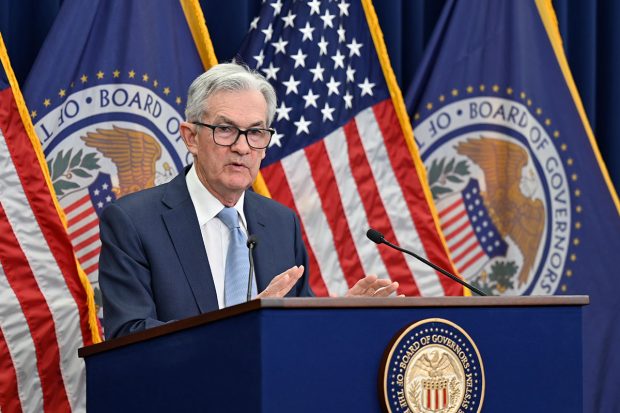
Jerome Powell Wednesday, Dec. 14, 2022 (Source: Federal Reserve).
The Federal Reserve said Wednesday it expects to raise rates about 60
basis points in 2023, after a year in which rates zoomed from close to
zero to nearly 4.5%.
One result will be an easing of mortgage rates, which topped 7% this
fall and were at 6.4% last week. Mike Fratantoni, chief economist of the
Mortgage Bankers Association, said he expects the rates to drift down
to about 5.2% by the end of next year.
“The housing market has certainly welcomed the recent decline in
mortgage rates,” Fratantoni said. “This decline is reflecting market
expectations of being near the peak for short-term rates, as well as
increased signs that the U.S. is headed for a recession next year.”
Mike Fratantoni
The Federal Reserve’s Open Market Market Committee raised the federal
funds rate 50 basis points Wednesday to 4.25% to 4.50%. The median
estimate among FOMC members is that the rate will be 5.1% by the end of
2023.
NAFCU Chief Economist Curt Long said that projection means the FOMC
is likely to raise rates 25 basis points at each of its next two
meetings: Jan. 31-Feb. 1 and March 22-23.
“However, if at that point price pressures are still ratcheting down,
Fed officials are likely to hit the pause button on rate hikes earlier
than they currently anticipate,” Long said.
Curt Long
Federal Reserve Chair Jerome Powell
said the most important question to the FOMC is how high it needs to
raise rates. Ultimately, he said the most important question will be
“how long we remain restrictive.”
“The strong view on the committee is that we’ll need to stay there
until we’re really confident that inflation is coming down in a
sustained way, and we think that that will be some time,” Powell said.
The Fed is projecting
the core PCE inflation measure it follows will fall from 4.8% now to
3.5% by the end of 2023. In September it expected the rate would be 4.5%
in December and fall to 3.1% by December 2023.
CUNA Senior Economist Dawit Kebede said inflation remains well above
the Fed’s 2% long-term goal, although recent signs show it is cooling as
gasoline prices fall, supply chain conditions improve and consumer
demand shifts back to services from goods.
Kebede said high interest rates are slowing investments. While the
labor market is currently strong, the Federal Reserve projects
unemployment to rise from 3.7% in November to 4.6% by December 2023.
Dawit Kebede
“Historical data indicates such a large increase in unemployment
within a year period signals the beginning of a recession,” Kebede said.
Powell disagreed. He said that the size of the Fed’s projected
increase in the unemployment rate would not signal a recession because
the Fed is also projecting economic growth — albeit slow growth. “That
4.7% is still a strong labor market,” Powell said.
Fratantoni repeated the MBA forecast that a recession will begin in the first half of 2023.
Powell hasn’t forecast a recession.
“I don’t think anybody knows if we’ll have a recession or not,”
Powell said. “If there is a recession, nobody knows how deep it would
be,” he said.
Powell said workers will suffer as joblessness rises, but he held out
the hope that companies might be slower to lay off workers in a
slow-growth economy because of an apparent “structural labor shortage.”
“The fact that there’s a strong labor market means that that
companies will hold onto workers,” longer, he said. “It also means that
the costs in unemployment may be less.”
“That’s a reasonably possible outcome,” he said. “We’ll see though.”
PITTSBURGH–The Twelve Days of Christmas are going to require many more days of work to pay for all of them in 2022.
PNC
Bank has released its annual Twelve Days of Christmas expense index in
which it tabulates what it would cost to purchase all of the items
mentioned in the famous holiday song, which is sometimes better known as
the “Partridge in a Pear Tree” song.
PNC’s conclusion this year:
Shoppers will need to have “significantly more money on-hand to fill
stockings this holiday shopping season.”
The average unit price
tag for the PNC CPI Index in 2022 is $45,523, an increase of $4,118 over
2021, or about 10.5%. The bank said the "True Cost of Christmas,"
which accumulates the total cost of all 78 units (364 gifts), increased
to $197,071 from last year's total of $179,454 - or about 9.8%.
The "Core" cost of Christmas - excluding the more volatile and
unpredictable gift prices - was $118,322, compared with last year's
total of $100,704, according to PNC.
The bank’s analysis found
that with rising costs in the employment sector, average wage-related
costs for the five related items were 15.3% higher. Five of the
remaining seven items experienced a collective average increase of 5.4%.
Adding Up the Tab
Among the findings for some of the 12 days:
Supply and demand has created market competition within the fowl
sector, namely for Partridges, Turtle Doves and French Hens, which in
2022 are seeing a collective price increase of 29.4%, mainly due to
higher cost of feed. The good holiday news: the market for Calling Birds
and Swans A-Swimming was unchanged for another year.
After falling -5.3% in 2021, Gold Rings increased in price by 39.1%
in 2022, the highest increase of all elements. “This coincides with
increases in the spot price for gold as Santa has been hoarding precious
metals to fight inflation,” the bank said. “Geese A-Laying continued
their flying higher, climbing 9.1%5 in 2022, after jumping 15.8% in 2021
and 35.7% in 2020.”
The lifting of pandemic restrictions has led to an increase in live
performances, but that’s been offset by the tight labor market, which
has caused the cost for Lords-a-leaping, Pipers Piping, Drummers
Drumming and Ladies Dancing to increase a collective 15.3%.
Ladies-Dancing wages rose 10% while Lord A-Leaping increased
24.2%--"something that certainly will continue to fuel arguments over
wage inequality,” according to the bank.
Moreover, the cost for Maids A-Milking (the only unskilled workers in
the index), hasn't changed in more than a decade, reflecting the
stagnate level in minimum wage rates, the annual measure added.
Recent indicators point to modest growth in spending and production. Job gains have been robust in recent months, and the unemployment rate has remained low. Inflation remains elevated, reflecting supply and demand imbalances related to the pandemic, higher food and energy prices, and broader price pressures.
Russia's war against Ukraine is causing tremendous human and economic hardship. The war and related events are contributing to upward pressure on inflation and are weighing on global economic activity. The Committee is highly attentive to inflation risks.
The Committee seeks to achieve maximum employment and inflation at the rate of 2 percent over the longer run. In support of these goals, the Committee decided to raise the target range for the federal funds rate to 4-1/4 to 4-1/2 percent. The Committee anticipates that ongoing increases in the target range will be appropriate in order to attain a stance of monetary policy that is sufficiently restrictive to return inflation to 2 percent over time. In determining the pace of future increases in the target range, the Committee will take into account the cumulative tightening of monetary policy, the lags with which monetary policy affects economic activity and inflation, and economic and financial developments. In addition, the Committee will continue reducing its holdings of Treasury securities and agency debt and agency mortgage-backed securities, as described in the Plans for Reducing the Size of the Federal Reserve's Balance Sheet that were issued in May. The Committee is strongly committed to returning inflation to its 2 percent objective.
In assessing the appropriate stance of monetary policy, the Committee will continue to monitor the implications of incoming information for the economic outlook. The Committee would be prepared to adjust the stance of monetary policy as appropriate if risks emerge that could impede the attainment of the Committee's goals. The Committee's assessments will take into account a wide range of information, including readings on public health, labor market conditions, inflation pressures and inflation expectations, and financial and international developments.
Voting for the monetary policy action were Jerome H. Powell, Chair; John C. Williams, Vice Chair; Michael S. Barr; Michelle W. Bowman; Lael Brainard; James Bullard; Susan M. Collins; Lisa D. Cook; Esther L. George; Philip N. Jefferson; Loretta J. Mester; and Christopher J. Waller.
WASHINGTON–With the Federal Reserve expected to announce another rate
increase today, new data show consumer prices rose last month at the
slowest 12-month pace since December 2021, credit union economists are
saying.
Dr. Dawit Kebede
According to the Labor Department, the consumer price index
climbed 7.1% in November over one year earlier, down significantly from
7.7% in October and down even further from the June 2022 peak of 9.1%.
Core
CPI, which excludes volatile energy and food prices was up just over 6%
from a year ago, slightly better than the 6.3% gain in October.
The
Federal Reserve’s Open Market Committee (FOMC) is wrapping up two days
of meeting today with most analysts expecting a 50-basis-point bump in
rates as the central bank continues its attempts to tame inflation. A
half-point increase would bring rates to a range between 4.25% and 4.5%,
the highest level since December 2007.
CUNA: ‘Going in Right Direction’
“Inflation
slowed down in November as the price of gasoline, used cars, medical
care, and air travel declined. Increases in food and housing prices
slightly offset these decreases resulting in monthly price bump of
one-tenth of a percentage point,” said CUNA Senior Economist Dawit
Kebede. “The headline inflation declined in November to 7.1% from 7.7%
in October over a 12-month period.
“Most of the monthly increase
in the consumer price index (CPI) comes from housing which is a lagged
indicator. It takes over a year for the CPI to reflect current market
trends,” Kebede continued. “Tight monetary policy which recently pushed
mortgage rates very high led to home price declines in several places.
However, it takes time for this current market trend to show up in the
CPI.
“The Federal Reserve is expected to increase the fed funds
rate by 50 basis points…moving away from the aggressive consecutive
increases in the last four meetings. This CPI report shows that price
trends are going in the right direction although inflation is still very
high above target.”
NAFCU: Should be a ‘Healthy Holidays’
"According
to data released by the Bureau of Labor Statistics (BLS), headline
inflation and core inflation moderated for a second consecutive month
while remaining elevated above historic levels,” said NAFCU Economist
Noah Yasif. “Headline CPI increased by 0.15 m/m in a marked deceleration
from October’s reading, while also beating consensus estimates of 0.35
m/m. This decline was principally driven by lower energy prices, which
contracted by 1.65 m/m, but offset by increased shelter and food costs,
which increased by 0.65 m/m and 0.55 m/m respectively. Used vehicle
prices, a major contributor to the initial inflation surge this year,
also declined by 2.95 m/m.
“Against the backdrop of another, and
final, FOMC meeting for 2022, November’s readings make these
disinflationary trends harder to dismiss and provide grounding for the
dovish faction of the FOMC to argue for a pause to rate hikes early next
year,” Yasif continued. “These numbers also compliment recent readings
of consumer sentiment, which are improving and which reflect less
anxiety over inflation. Markets jumped on the news, and credit unions
should anticipate a healthy holiday shopping season as households absorb
the combination of a still-strong labor market, moderating inflation,
rising investment values, and stable or falling borrowing rates."
SAN CARLOS, Calif.—Apple’s new
savings account for Apple Card should be a “wake-up call” for credit
unions, says one analyst, who is urging CUs to respond in the right way
or risk losing deposits and member relationships.
Richard Crone,
principal of Crone Consulting LLC, told CUToday.info that more credit
unions need to support Apple Wallet—as well as all the other so-called
“pay,” while additionally removing their and savings account withdrawal
limits.
“Credit unions by definition are supposed to have better
savings rates because they’re member-owned and not-for-profit and are
chartered to pass along the higher yields to their membership,” said
Crone. “But in order to compete with Apple Savings, with Goldman Sachs,
they’ll have to do more than match or surpass Goldman’s high-yield
rates, they’ll have to support Apple Wallet and offer a savings account
without any transaction limits or fees, which most credit unions do not
do.”
Apple recently announced a new savings account for Apple Card
that will allow users to save via an Apple Cash account while also
building rewards via a high-yield savings account from Goldman Sachs.
Daily Cash is the 3% cash back all Apple Cardholders receive on purchases.
According
to Apple.com, in the coming months, Apple Card users will be able to
open the new high-yield Savings account and have their Daily Cash
automatically deposited into it — with no fees, no minimum deposits, and
no minimum balance requirements. Soon, users will also be able to spend,
send, and save Daily Cash directly from Wallet, Apple.com reported.
‘Favorite Benefits’
“Savings
enables Apple Card users to grow their daily cash rewards over time,
while also saving for the future,” Jennifer Bailey, Apple’s vice
president of Apple Pay and Apple Wallet, told Apple.com. “Savings
delivers even more value to users’ favorite Apple Card benefit — daily
cash — while offering another easy-to-use tool designed to help users
lead healthier financial lives.”
Once users set up their savings
account, all future Daily Cash received will be automatically deposited
into it, or they can choose to continue to have it added to an Apple
Cash card in Wallet. Users can change their daily cash destination at
any time, Apple.com noted.
“When you talk to credit unions, you
find that nearly all still impose transaction limits on savings
accounts, even though the Federal Reserve Bank eliminated the six
transactions per month limit on savings accounts in April 2020 in their
pandemic updates to Regulation D, driven by making money more accessible
during the lockdowns,” Crone explained. “There are big strategic
implications here for credit unions.”
‘Greater Utility’
Richard Crone
Crone said the success of the new Apple Card venture is the
ability to actually provide full utility, not only for credit but for
prepaid debit, general-purpose reloadable cards.
“The challenger
banks and neo banks all use general purpose, reloadable cards as
checking,” said Crone. “This extends greater utility to the consumer,
but more importantly, it's a platform for adding new services. And this
is the first one that Apple is adding—meaning if you earn a cash reward
you can open a savings account and that savings account will pay
high-yield interest on your balances that you earn from making purchases
with the Apple Card.
“So, you can see that it's the full
spectrum,” he continued. “They not only allow you to make purchases
giving you immediate access to your cash rewards, on top of that you
hold the money in a savings account whereas you earn those rewards you
can earn interest. In fact, they allow you to make additional deposits
to that savings account and use it as a cash management account.”
‘Wake-Up Call’
But
according to Crone, what is an even larger concern than losing deposits
to a new Apple savings account that functions like checking is the
convenience with which the account can be opened.
“That account is
opened instantly, and they now have a relationship with that customer,” said Crone. “The enrollment today isn't occurring at
branches. The enrollment isn't occurring among select employer groups.
And the enrollment certainly isn't happening at substance over the
phone. The enrollment is happening online. This should be a wake-up call
for credit unions on where to increase enrollment. It’s not at a
branch. It’s not on the phone. It’s not through a SEG.”
To be
effective at enrolling consumers via online platforms, Crone believes
credit unions must “redefine” their fields of membership.
“The
field of membership should not be based on where that consumer is, the
common bond of a meta user is the group,” explained Crone. “So, that
could mean Uber drivers, or TikTok users or… Credit unions are stuck in
the old definition of the field of membership and that has to change.”
The ’New Transaction Accounts'
What also has to change are the rules around credit union's savings accounts, emphasized Crone.
“Savings
accounts are becoming the new transaction accounts, competing with
checking,” Crone explained. “But, as I said, the Federal Reserve in
April of 2020 lifted the withdrawal restrictions on savings accounts.
What Apple is doing here is pushing the edge of that the redefinition of
what a savings account is. They can provide immediate access and
utility to the savings account through Apple Pay and you can now pay
anywhere, and you can now deposit as much as you want anytime, or
withdrawal funds then. It essentially has all the utility of a checking
account.”
Credit unions need to follow suit with savings design,
and also make debit and credit products available through the “pays,”
said Crone.
“They need to do this, and address field of
membership, if they want to compete for the next wave of young members.
They need to do this to have a fighting chance,” he said.
ALEXANDRIA, Va.–Total assets in federally insured credit unions was
up more than 5% and total loans were up nearly 20% in the year ending
with the third quarter, but overall net income was down 14% and
membership declined in every asset category below $1 billion, according
to new NCUA data.
The numbers, released as part of the agency’s Quarterly Data Summary Report,
also show rising employee compensation and benefits, which were up $2.5
billion (8.9%), accounted for about half of the increase in
non-interest expenses.
According to NCUA, net income totaled $18.5
billion at an annual rate in the first three quarters of 2022, down
$3.0 billion, or 14.1%, from the same period a year ago.
The net
interest margin for federally insured credit unions was $58.7 billion at
an annual rate in the first three quarters of 2022, or 2.79% of average
assets. That compares with $50.0 billion, or 2.59% of average assets,
in the first three quarters of 2021, NCUA said.
“Federally insured
credit unions continue to perform well overall, and that’s good news,”
NCUA Chairman Todd M. Harper said in a statement. “However, with ongoing
inflationary pressures and rising interest rates, a credit union’s
ability to manage its interest rate and liquidity risk exposures will
remain a crucial factor in its performance for the remainder of the year
and into 2023. Credit unions of all types and sizes must remain
diligent in managing their balance sheets, financial performance, and
liquidity, interest rate, and credit risk levels as we navigate the
challenging economic environment ahead of us.”
Assets Rise
Total assets in federally insured
credit unions rose by $132 billion, or 6.6%, over the year ending in the
third quarter of 2022, to $2.15 trillion, while total loans outstanding
increased $235 billion, or 19.2%, over the year to $1.46 trillion, the
Quarterly Report data show.
The average outstanding loan balance
in the third quarter of 2022 was $16,989, up $802, or 5%, from one year
earlier, while loan to share ratio stood at 78.4% in the third quarter
of 2022, up from 69.9% in the third quarter of 2021, according to NCUA.
The credit union system’s net worth ratio was 10.59% in the third quarter of 2022, compared with 10.23% one year earlier.
In
addition, the return on average assets for federally insured credit
unions was 88 basis points in the third quarter of 2022, down from 112
basis points in the third quarter of 2021. The median return on average
assets across all federally insured credit unions was 50 basis points,
down six basis points from the third quarter of 2021.
Numbers of CUs & Members
Meanwhile,
the number of federally insured credit unions declined to 4,813 in the
third quarter of 2022, from 4,990 in the third quarter of 2021. In the
third quarter of 2022, there were 3,015 federal credit unions and 1,798
federally insured, state-chartered credit unions, NCUA reported.
The
number of credit unions with a low-income designation declined to 2,621
in the third quarter of 2022 from 2,643 one year earlier.
The
number of complex federally insured credit unions (those with total
assets greater than $500 million) rose to 708 from 703 a quarter
earlier. NCUA said 414 CUs opted into the Complex Credit Union Leverage
Ratio (CCULR) framework with an average CCULR of 11.42%.
294 reported under the Risk-Based Capital (RBC) framework with an average RBC ratio of 15.26%.
Federally insured credit unions added 5.7 million members over the year, and credit union membership in
these institutions reached 134.3 million in the third quarter of 2022.
Other Performance Data
Here’s a look at other industry performance data, according to the NCUA Quarterly Report:
Balance Sheet Details
Cash declined $104.4 billion, or 40.6%, to $152.7 billion. (NCUA
noted that the 2022Q1 Call Report redefined cash to exclude cash
equivalents (investments with original maturities of three months or
less). Cash now represents cash on hand and cash on deposit.)
Total investments rose $2.5 billion, or 0.6%, to $446.7 billion.
(NCUA noted that the 2022Q1 Call Report introduced a new definition for
total investments on the investment maturity schedule.)
Investments with maturities less than or equal to one year declined $13.4 billion, or 13.0%, to $90.1 billion.
Investments with maturities of one to three years rose $7.3 billion, or 6.6%, to $117.2 billion.
Investments with maturities of three to five years fell $15.5 billion, or 13.1%, to $103.0 billion.
Investments with maturities of five to 10 years rose $21.4 billion, or 22.7%, to $115.2 billion.
Investments with maturities greater than 10 years increased $2.8 billion, or 15.3%, to $21.1 billion.
Credit Union Lending
Total loans outstanding increased $234.9 billion, or 19.2%, over the
year, to $1.46 trillion. (NCUA noted that the loans variable was
redefined to include loans to natural person credit unions, which were
previously reported as investments. Credit union loan balances rose in
all major categories, compared with the third quarter of 2021.)
Loans secured by 1- to 4-family residential properties increased
$102.9 billion, or 19.2%, to $639.0 billion in the third quarter of
2022.
Auto loans increased $74.1 billion, or 18.6%, to $472.1 billion.
Used auto loans rose $48.7 billion, or 19.0%, to $305.3 billion, and new
auto loans rose $25.4 billion, or 17.9%, to $166.8 billion.
Credit card balances rose $8.7 billion, or 14.2%, to $69.9 billion.
Non-federally guaranteed student loans increased $1.0 billion, or 16.1%, to $7.5 billion.
Commercial loans, excluding unfunded commitments, increased $26.4
billion, or 25.0%, over the year to $132.2 billion in the third quarter
of 2022. The agency noted commercial loans are not directly comparable
to member business loans.
Delinquency Rates
The delinquency rate at federally insured credit unions was 53 basis
points in the third quarter of 2022, up seven basis points compared
with the third quarter of 2021.
The delinquency rate on non-commercial real estate loans was 39
basis points in the third quarter of 2022. “This is a new variable added
in 2022 Q1; data for previous quarters are not available,” NCUA stated.
The credit card delinquency rate rose to 130 basis points from 85 basis points one year earlier.
The auto loan delinquency rate increased 18 basis points over the year to 53 basis points in the third quarter of 2022.
The delinquency rate for commercial loans, excluding unfunded
commitments, was 42 basis points in the third quarter of 2022, compared
with 53 basis points in the third quarter of 2021.
The net charge-off ratio for all federally insured credit unions was
30 basis points in the third quarter of 2022, up four basis points
compared with the third quarter of 2021.
Liabilities and Net Worth
Credit union shares and deposits rose by $110.9 billion, or 6.3%, over
the year to $1.86 trillion in the third quarter of 2022. Regular shares
increased $39.5 billion, or 6.2%, to $679.5 billion. Other deposits
increased $37.2 billion, or 4.9%, to $791.5 billion, led by money market
accounts, which grew $24.0 billion, or 6.1%, over the year.
The credit union system’s net worth increased by $21.3 billion, or
10.3%, over the year to $227.8 billion. The aggregate net worth ratio —
net worth as a percentage of assets — stood at 10.59% in the third
quarter of 2022, up from 10.23% one year earlier.
Income Statement Details
Net income for federally insured credit unions in the first three
quarters of 2022 totaled $18.5 billion at an annual rate, down $3.0
billion, or 14.1%, from the first three quarters of 2021. Interest
income rose $9.0 billion, or 15.3%, over the year to $67.4 billion.
Non-interest income fell $3.4 billion, or 12.8%, to $23.4 billion,
largely due to a drop in other income.
Interest expense totaled $8.8 billion annualized in the first three
quarters of 2022, up $0.3 billion, or 3.4%, from one year earlier.
Non-interest expenses grew $5.1 billion, or 9.5%, over the year to $59.1
billion in the first three quarters of the year. Rising employee
compensation and benefits, which were up $2.5 billion, or 8.9%,
accounted for about half of the increase in non-interest expenses.
The aggregate net interest margin widened by $8.7 billion, or 17.4%,
over the year to $58.7 billion at an annual rate in the first three
quarters of 2022.
The credit union system’s provision for loan and lease losses or
credit loss expense increased $3.2 billion, or 257.3%, to $4.4 billion
at an annual rate in the first three quarters of 2022.
Performance by Asset Category
“Consistent with
long-running trends, credit unions with assets of at least $1 billion
reported the strongest growth in loans, membership, and net worth over
the year ending in the third quarter of 2022,” NCUA noted.
The report further found:
The number of federally insured credit unions with assets of at
least $1 billion increased to 414 in the third quarter of 2022 from 395
in the third quarter of 2021. These 414 credit unions held $1.6 trillion
in assets, or 75% of total system assets, NCUA said, with credit unions
in this category reported loan growth of 22.6% over the year.
Membership rose 8.1%. Net worth increased 12.8%.
The number of federally insured credit unions with assets of at
least $500 million but less than $1 billion rose to 294 in the third
quarter of 2022 from 290 in the third quarter of 2021. These 294 credit
unions held $212.5 billion in total assets, or 10% of total system
assets. Credit unions in this category reported 13.1% growth in total
loans outstanding over the year. Membership edged down 0.3%, while net
worth increased 7.3%.
The number of federally insured credit unions with at least $100
million but less than $500 million in assets declined to 1,076 in the
third quarter of 2022 from 1,083 in the third quarter of 2021. These
1,076 credit unions held $243.9 billion in total assets, or 11% of total
system assets. Credit unions in this category reported a 7.7% increase
in total loans outstanding over the year. Membership fell 4.3%, while
net worth rose 2.9%, NCUA said.
The number of federally insured credit unions with at least $50
million but less than $100 million in assets declined to 675 in the
third quarter of 2022 from 688 one year earlier. These 675 credit unions
held $49.2 billion in total assets, or 2% of total system assets.
Credit unions in this category reported a 4.9% increase in total loans
over the year. Membership fell 4.8%. Net worth rose 1.3%.
The number of federally insured credit unions with assets of at
least $10 million but less than $50 million declined to 1,379 in the
third quarter of 2022 from 1,466 in the third quarter of 2021. These
credit unions held $36.1 billion in assets, or 2% of total system
assets. Credit unions in this category reported a 0.4% increase in loans
over the year. Membership declined 8.1%, while net worth fell 3.5%,
NCUA reported.
The number of federally insured credit unions with less than $10
million in assets declined to 975 in the third quarter of 2022 from
1,068 in the third quarter of 2021. These credit unions held $4.1
billion in assets, or 0.2% of total system assets. Credit unions in this
category reported a 3.8% decline in loans over the year. Membership
fell 11.1%, while net worth declined 6.4%.
ANDRIA, Va.– NCUA has issued a Letter to Credit Unions that
dials back some of the powers CUs have been granted over the past three
years when it comes to holding both board and membership meetings,
including the authority to hold both types of meetings coompletely
virtually. The agency is allowing for some flexibility, however,
allowing for hybrid meeetings.
Since the onset of the COVID-19 pandemic the agency has been
giving federal credit unions the flexibility to conduct membership and
board of director meetings completely virtually. That emergency
exemption is set to expire on Dec. 31, 2022.
“Specifically, in
those actions the NCUA provided that a federal credit union could adopt
at any time, by a two-thirds vote of its board of directors, and without
additional NCUA approvals, a bylaw amendment to Article IV of the
NCUA’s Federal Credit Union Bylaws. The letters to federal credit unions
provided specific wording for the bylaw amendment,” the agency said in
the letter. “In addition, the NCUA has issued several meeting-related
notifications to federal credit unions since 2020 in connection with the
COVID-19 pandemic. Specifically, the NCUA stated in those notifications
that if a federal credit union had adopted the above-referenced bylaw
amendment, then it was appropriate for that federal credit union to
invoke its provisions for meetings if a majority of its board of
directors so resolved for each such meeting. The NCUA noted that general
quorum requirements still had to be met for ‘virtual-only’ meetings.”
Looking Forward
Moving
forward, NCUA said it does not “believe that current circumstances
continue to warrant federal credit unions to invoke the subject bylaw
provision beyond year-end 2022.”
Federal credit unions that have
already adopted the bylaw amendment may retain it in their bylaws, but
it will not be applicable after the end of 2022 unless NCUA issues a new
notification allowing federal credit unions to invoke it, the agency
said.
“Although ‘virtual-only’ member meetings will no longer be an option,
the NCUA reminds federal credit unions that they may choose to hold
hybrid meetings if that suits their needs,” the letter states. “Hybrid
meetings consist of a meeting held virtually in conjunction with an
in-person component for members who wish to or need to attend that way.
While general quorum requirements still must be met for hybrid meetings,
federal credit unions may count attendees at both the virtual and
in-person components toward those requirements.” NCUA stated a hybrid
meeting format could preserve federal credit union resources and reduce
the effort required to hold meetings without disenfranchising those
members for whom virtual attendance is difficult or impossible.
Additional Requirements
Federal
credit unions must also consider whether their current bylaws authorize
hybrid meetings or whether bylaw changes will be necessary, NCUA
stated.
In addition, NCUA said:
Federal Credit Union Bylaws permit federal credit union boards to
conduct “virtual-only” meetings for all but one of their board meetings
per calendar year. Further, if a quorum of the directors is physically
present at the one required in-person meeting, then the remaining
directors may attend that meeting virtually.
Federal Credit Union Bylaws permit flexibility for distributing
member notices. “Specifically, the bylaws provide that notices for
member meetings may be sent by electronic mail to members who have opted
to receive statements and notices electronically. As such, a paper
mailing is not required for all members, only those members who have not
opted to receive electronic statements and notices.”
Dan Berger
NAFCU Response
“NAFCU appreciates the NCUA heeding our
calls for additional flexibility in credit unions’ annual member meeting
requirements,” said NAFCU President and CEO Dan Berger. “Even as the
COVID-19 pandemic further demonstrated areas in need of modernization,
credit unions proved how innovative they are in finding ways to serve
members amid disruption. By allowing hybrid meeting formats, and for
members meeting both in-person and virtually to count toward quorum in
most situations, credit unions can keep members fully informed in the
way that works best for them.”
Virginia League Response
We’re
pleased to see the flexibility involving the counting of both in-person
and virtual attendees toward a quorum,” said Virginia CU League
President Carrie Hunt. “That issue was a specific focus of our
engagement efforts with NCUA. We appreciate NCUA giving issues
surrounding membership and board meeting requirements the careful
consideration they deserve. We still support full virtual meetings, but
we thank the agency for providing some degree of flexibility to federal
credit unions. Credit unions were quick to address the challenges
associated with Board and membership meetings posed by the pandemic.
Credit unions proved they could leverage today’s technology to
successfully balance the governance needs and orderly operation of the
credit union with the protection of members’ interests and their ability
to participate in the affairs of their credit union.”
Bill Would Extend CLF Enhancements
Meanwhile,
legislation (S. 5183) that would extend by five years enhancements made
to NCUA’s Central Liquidity Facility (CLF) by the CARES Act and that
would allow corporate credit unions to purchase CLF capital stock for a
specific subset of members rather than for all members has been
introduced by Sens. Alex Padilla (D-CA) and Kevin Cramer (R-ND).
The expanded CLF authorities expire Dec. 31.
“NAFCU
thanks Senators Padilla and Cramer for introducing bipartisan
legislation which would offer credit unions greater flexibility and
ample liquidity resources, as they continue to brace economic
headwinds,” stated NAFCU President and CEO Dan Berger. “We have urged
lawmakers to make CLF enhancements permanent since the CARES Act and
will continue to do so to allow credit unions to best serve their 134
million members.”
The trade association noted that both lawmakers
have advocated for Congress to include provisions that would make CLF
enhancements permanent in the FY2023 National Defense Authorization Act
(NDAA), which is still being worked on by both chambers.
Alex Padilla
Small CUs ‘Don’t Not Have Access’
“Congress
created the Central Liquidity Facility in 1978 to improve the general
financial stability of credit unions by serving as a liquidity lender to
credit unions experiencing unusual or unexpected liquidity shortfalls,”
said Padilla in a statement. “Unfortunately, under current law, smaller
credit unions often do not have access to the critical tool that could
help them address liquidity shortfalls, especially amid higher interest
rates.”
CUNA Leaders Recognized
Jim Nussle
Separately, CUNA President/CEO Jim Nussle and Deputy Chief Advocacy Officer Jason Stverak have been named among The Hill’stop lobbyists for
2022. Nussle and Stverak were commended for demonstrating, “a track
record of success in the halls of Congress and the administration during
a critical year for policy.”
CUNA noted that since Nussle joined the trade group in 2014 he has appeared on the list each year since then.
“Credit
unions were able to accomplish several priorities this year through
strong engagement with policymakers who understand the power of the
credit union difference,” Nussle said. “Our laser focus on our members
cuts through a lot of the noise in Washington, D.C., and I thank CUNA,
League, and credit union leaders for the great advocacy work they do.”
Stverak joined CUNA in October 2021 after serving as deputy chief of staff to Sen. Kevin Cramer (R-ND).
“It’s
an honor to be part of a team that is able to accomplish real, positive
changes for our members,” Stverak said. “This honor is a testament to
the strong relationships CUNA, Leagues, and credit unions continue to
foster with each other, and with policymakers at the federal level.”
Stverak was previously recognized as a Top 100 Lobbyist by the National Institute for Lobbying and Ethics.


 Source: Shutterstock.
 Matthew Butler


 Mike Fratantoni
 Curt Long
 Dawit Kebede


