Friday, March 31, 2023

Omnicommander is excited to announce the launch of BRANCHCOMMANDER

Omnicommander is excited to announce the launch of BRANCHCOMMANDER, the industry's first-ever, fully comprehensive - fully customizable digital branch! More than just a website, this is an integrated, online presence for credit unions.

BRANCHCOMMANER is a feature-rich platform that will eliminate several back-office, labor-intensive processes at the credit unions while driving an incredible user experience for visitors to your digital branch. The ability to chat in real-time with real people while searching for a vehicle, applying for a loan, scheduling an appointment, or searching for a physical branch or ATM is all baked in.


NCOFCU Contact: Josh Gallo 
Office 800-807-3109 #220
Cell 917.402.7720
josh@omnicommander.com


Thursday, March 30, 2023

Apple Now Rolling Out Its Buy Now, Pay Later Offering (BNPL)

03/29/2023 CUToday

CUPERTINO, Calif.–Apple is finally launching Apple Pay Later, its version of the buy now, pay later (BNPL) offerings that have taken hold over the past several years and eroded credit card volume in the process.

thumbnail_Apple BNPL

In announcing the offering, Apple said users can use the service to apply for Pay Later loans of $50 to $1,000 and then repay those loans through four payments over the course of six weeks with no interest or fees.

Apple Pay Later exists within the Apple Wallet and is designed to allow borrowers to avoid paying the full price for a product right away. Apple announced the service in 2022, but its launch was delayed due to what were called “technical and engineering issues.”

‘No Impact on Credit,’ But…

According to Apple, users can apply for a loan within the Apple Wallet “with no impact to their credit,” but the company notes in the fine print that the Pay Later loan and payment history “may be reported to credit bureaus and impact their credit,” the Verge reported.

Once approved for a loan, users will start seeing the Pay Later option at checkout in apps and online on the iPhone and iPad. Apple further said in a statement that users will be able to view and manage their loans within the Wallet app and that they’ll receive notifications when payment is due.

The service is not yet available to everyone. According to Apple, “randomly selected” users will receive invites to obtain early access to Apple Pay Later. The service is only available in the U.S. and for online and in-app purchases on iOS 16.4 and iPadOS 16.4.

Apple Handling Financial Side, Too

Unlike its earlier partnership with Goldman Sachs when it launched its credit card, with the BNPL offering the company will be handling the financial side, as well, through a new subsidiary, Apple Financing LLC, which the company says “is responsible for credit assessment and lending.”

The company did, however, partner with the BNPL program Mastercard Installments to enable Apple Pay Later, while “Goldman Sachs is the issuer of the Mastercard payment credentials,” according to the Verge.com analysis.

Apple Financing LLC will begin reporting Pay Later loans to credit bureaus starting in the fall, the company said.
Concern by Credit Unions

BNPL solutions such as that from Apple have raised strong concerns within credit unions for numerous reasons, including the loss of credit card transactions/loans by members, and the fact members can get into financial trouble due to too many BNPL purchases without that debt appearing on credit reports.

Numerous efforts have been announced or are underway within CUs to respond with BNPL financing solutions of their own.

Wednesday, March 29, 2023

Credit union board members are industry heroes.


Today’s environment just might be the most challenging one that credit union boards have faced in modern memory. The pressures of serving on volunteer credit union boards are extremely high. Just like their counterparts on paid boards at for-profit companies, credit union boards have a major fiduciary responsibility, without the attendant compensation and often without appropriate recognition. Yet like their for-profit counterparts, they govern substantial financial organizations and are responsible for managing capital risk.


Credit union board members are industry heroes. They assure member service and financial safety through their leadership in good governance. They provide insights into strategic goals. They oversee management of risk, which seems greater today than ever before. Current issues include an intensely competitive environment, often from larger and better funded entities. Organizational stresses include litigation, regulatory compliance and decisions related to technology and investment capital for hardware, software and cybersecurity protection.

This is hard work. Every director must ask themselves why they joined the board, and whether they have the capacity to continue serving at the highest of levels. 

They must consider questions like:

1. Do you fully understand current expectations of board service?

2. Are you clear on the credit union’s mission and statement of purpose?

3. Do you understand fiduciary duties of care, loyalty and obedience, and are you familiar with your directors and officers (D&O) policy?

4. Do you understand the charter and workings of each board committee?

5. Are you prepared to fully participate and engage in both committee and board meetings?

6. Do you have access to organizational leadership to learn all you need to assess your participation?

7. Are you satisfied with the “tone at the top” in addressing ethical conduct and compliance with law and regulation?

8. Does the board have an effective onboarding process?

Ongoing board service demands additional board member attention. Consider the following:

1. Are you fully up to speed on, and given full access to, the organization’s business plan? And do you receive data on member satisfaction?

2. Is the board fully engaged in Enterprise Risk Management (ERM)?

3. Do you understand the technological needs and investment requirements for safe and effective operation, including a robust cybersecurity plan?

4. Do you fully understand the appropriate relationship between board and management?

5. How effective is the board in assessing the effectiveness and accountability of the C-suite?

6. Is there a succession plan in place?

7. Is the board committed to Diversity, Equity & Inclusion (DEI) and Environmental, Social & Governance (ESG) awareness?

8. Do you review the impact associated with reputational risk and your continuing service on the credit union board?

9. How effectively do you participate in board conversations, and are you comfortable with challenging conversations when you have a different point of view?

“Duty of Loyalty” requires directors to be well informed to proceed in good faith in making business decisions in the best interest of the organization. Board members must now devote more time, effort and talent to keep themselves fully informed to oversee the credit union’s operations, policies and strategy.

The attention to “Duty of Care” is also increasing. Do you actively participate in strategic discussions based on diversity and community outreach? Directors know they must act with the care that a person in a like position would reasonably believe is appropriate for members of a governing body in similar circumstances. Pandemic effects, demographic changes and technological disruption are taxing the best minds out there.

The board’s work is becoming much more difficult, due to factors including the changing market for digital and tech-based services that younger demographics demand. This complex competitive environment requires ever-increasing investments just to stay in the game. Such risks and challenges impact credit unions’ financial standing and for some, it’s about survival. It is increasingly difficult to chart a path forward.

Compared to the past, service-oriented credit union board members are facing mounting stress. Their decisions go to the heart of delivering safe, secure, state-of-the-art service to members. Many boards are finding that escalating investment requirements are forcing them to choose credit union merger strategies in order to maintain member service and safety.

These cumulative pressures are causing a growing number of credit unions to seek outside advisors to help board members carry out their duties and responsibilities as they navigate uncharted waters. It often takes a new, trusted voice to make sure that current and potential board members can satisfactorily answer the questions above. The duties of care and loyalty require it.

 Stuart R. Levine is Chairman and CEO for Stuart Levine & Associates LLC in Miami Beach, Fla.

Tuesday, March 28, 2023

Lessons Learned from The Whale


Helping families and their businesses plan for the future


VenturaLaw.Net

of Counsel to CarballoLaw


Lessons Learned from The Whale

Like many people of a certain age, I was gladdened to learn that Brendan Fraser won Best Actor at this year’s Academy Awards. Fraser is truly one of Hollywood’s good guys who just couldn’t catch a break for a while. His comeback is evidence that, every now and then, the good guys can actually come out ahead.

So, with that in mind, we sat down to watch The Whale last Sunday, and wow, what a film and what a performance from everyone involved, but especially Fraser as Charlie and newcomer Sadie Sink as his daughter, Ellie. Keep an eye on her as she has a brilliant future ahead.

As stated by IMDB, the film’s premise is that a “reclusive, morbidly obese English teacher attempts to reconnect with his estranged teenage daughter.” That’s all true, but it only touches the most superficial level. It’s about that but much, much more.

In one scene, midway through, the film touches on an inheritance. So, it raises the question: what can we learn from The Whale? Beware, moderate spoilers lie ahead.

In the film, Fraser plays Charlie, a morbidly obese, housebound middle-aged man whose sole friend is, Liz, played spectacularly by Hong Chau. To Charlie’s luck, Liz is also a nurse and acts as his informal caregiver. During their interactions, we learn that Charlie:

  • Is of very modest means;   
  • Never leaves his apartment;
  • Is morbidly ill;
  • Will not seek medical help because of the cost; and,
  • Likely will die within days.

Knowing his days are numbered, Charlie attempts to connect with his estranged daughter, Ellie. She is very hard on and dismissive of Charlie whom she resents for abandoning the family when she was eight. In their interactions, we learn that Charlie’s sole asset is a bank account with $120,000 and that he wants to ensure that the money goes to Ellie on his death.

We also meet his ex-wife, Mary, played by the wonderful Samantha Morton, who apparently has a drinking problem. Charlie and Mary have an intimate dynamic of people who once cared for each but really don’t fully trust each other anymore. Charlie reveals his desire to leave his bank account to Ellie, to which Mary balks arguing that she’s just too young. She says that Ellie will just spend the money on “face tattoos and ponies”.

Mary has a point, here, though. Leaving large sums of money to teenagers is seldom a wise idea.

So, how can Charlie accomplish this goal through estate planning?

 Create a Trust

Charlie can create a trust and name Ellie as the beneficiary. By doing so, he can ensure that the money is protected and used for her education, healthcare, and other essential expenses. When she attains a certain age, usually stated as 25, then the remaining principal and interest will be disbursed to her. The most likely trustee usually would be Mary, however, Charlie doesn't want his ex-wife to be in control of the funds, as he doesn't trust her, and she has her own issues with alcohol.

 Appoint a (Trusted) Trustee

To address his concerns, Charlie can name his sole friend, Liz, as the trustee of the trust. The trustee will have the responsibility to manage the trust and ensure that the assets are used for Ellie’s benefit as per the terms of the trust.

By naming his Liz as the trustee, Charlie can ensure that the funds are managed by someone he trusts, who is responsible, and who has his daughter's best interests at heart. The trustee will be responsible for managing the funds and making decisions about distributions, ensuring that the money is used for its intended purposes.

 Include Specific Terms in the Trust

To ensure that the funds are used for his Ellie’s benefit and not misused, Charlie can include specific terms in the trust. He can specify that the funds are to be used only for her education, healthcare, and other essential expenses until she attains a certain age, usually 25.

He can also include provisions that limit the amount of money that can be withdrawn from the trust at a time or require the trustee to seek court approval before making significant distributions. By doing so, Charlie can ensure that the funds are used for the intended purposes and prevent any potential misuse of funds.

 Conclusion

In the end, none of this is done and, well, I’m not going to give away the rest of the plot. The ultimate disposition of the money, though, is never resolved.

Charlie should have consulted with an estate planning attorney. Any legal fee would have been a fraction of the $120,000 he had amassed. In the end, it would have ensured his goals, given him peace of mind, and taken care of Ellie. The Whale is proof that Estate planning isn’t just for the rich.

 ***

This article is provided for informational purposes only and is not intended as legal advice. For further inquiries, please feel free to contact me at the email or telephone listed below.


Contact

 305-502-1013

VenturaLaw.Net

Email

Linked In


Monday, March 27, 2023

As AI moves at breakneck speed, publishers gear up for a clash with Google and Microsoft


“Just Bard it”….not as catchy. Last week Google released its ChatGPT rival, Bard, as the chatbot race heats up (#AI-of-the-tiger). But Google expressed caution with the release, warning “things will go wrong,” and hasn’t integrated Bard into its search engine (unlike Microsoft, which launched a new CGPT-fueled Bing and 365 apps). Google’s cautiousness may be warranted: media publishers are gearing up for a showdown with Microsoft, Google, and OpenAI over their bots, The Wall Street Journal reported.

·       Facebook = no longer media’s biggest threat. In 2019, half of Americans got their news from FB, and publishers wanted compensation for lost ad revenue and traffic.

·       Now it’s AI bots. As you’ve probably heard, large language models are trained on a massive amount of text data. That includes copyrighted articles from the web.

·       Media execs are demanding compensation for use of their content in AI-generated responses. CGPT has been known to plagiarize and tweak human writing.

CGPT feels a connection… Last week OpenAI announced that CGPT can now browse the web to pull info from after 2021 (in some cases). That could pose an existential threat for news outlets. Publishing execs have started examining how much their content has been used to “train” bots, and are said to be exploring legal options, led by the publishing trade group News Media Alliance.

·       News Corp. CEO Robert Thomson said, “Clearly, they are using proprietary content — there should be, obviously, some compensation for that.”

·       “Fair use” law allows portions of copyrighted material to be used without permission in certain cases (think: news reporting, scholarly reports).

·       In the past, techies like Facebook and Microsoft have struck deals to pay publishers for news featured on their platforms. While OpenAI has leaned on fair use, it said it has also paid for rights to certain content.

THE TAKEAWAY

Moving faster than your problems can backfire… Rapid-fire AI releases show that tech titans are taking an “ask for forgiveness, not permission” approach. Industries haven’t yet had time to digest issues that could arise (picture: educators scrambling to detect cheating), from bias to misinformation to copyright infringement. But when issues catch up to the innovation, it could lead to a backlog of problems all at once.


Thursday, March 23, 2023

Existing Home Sales Rise in February, Breaking a Year-Long Streak

03/22/2023 Kurt Long NAFCU

ARLINGTON, Va.—Existing home sales rose 14.5% in February to a seasonally adjusted annual rate of 4.58 million units, breaking a 12-month decline streak and representing a 22.6% decrease compared to a year ago.

Long, Curt

Curt Long

“A lack of inventory buoyed prices during that year-long span, and supply remains extremely tight,” said NAFCU Chief Economist and Vice President of Research Curt Long. “Nevertheless, the median sales price declined on a year over year basis in February, ending the longest streak of increases on record.”

Existing home sales in February were up across regions, with the West leading (+19.4%) followed by the South (+15.9%), Midwest (+13.5%) and Northeast (+4%). Based on current sales, there were 2.9 months of supply at the end of the month; analysts consider 6 months of inventory a rough balance between supply and demand.

In addition, the median existing home price – not seasonally adjusted – rose 0.5% in February to $363,000.

Data Point From Midwest

“The cause of the decline in the median price is likely expanding sales of lower priced homes rather than a broad decline in home values,” Long said." In the Midwest, almost 40% of sales in February were of homes priced from $100,000-$250,000.

“Rates have been volatile recently, but with concerns over financial stability, there is more downside rate risk than has been present lately. Even if rates don’t materially decline, the market seems to have found equilibrium and there should not be further volume declines from January’s low point," said Long. 

NAFCU Chief Economist Curt Long said “the committee essentially split the difference” between pausing and raising rates.

Powell says an economic downturn might substitute for further rate hikes.

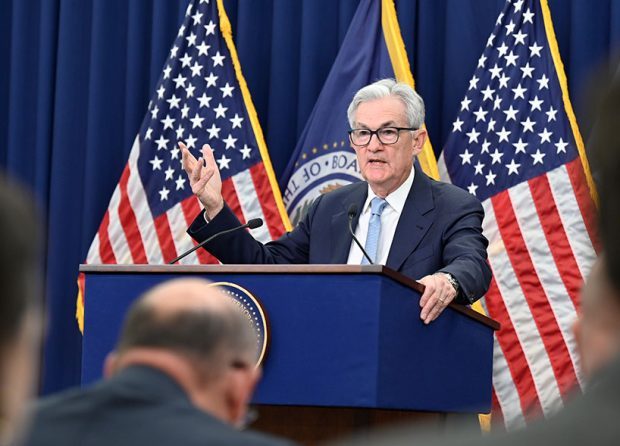
Fed Chair Jerome Powell answers reporters’ questions at the FOMC press conference Wednesday. (Source: Federal Reserve) Fed Chair Jerome Powell answers reporters’ questions at the FOMC press conference Wednesday. (Source: Federal Reserve)

The Fed said Wednesday it will raise rates by 25 basis points, but might hold off on further cuts if the economy worsens.

The Fed’s Open Market Committee raised the target range for the federal funds rate to 4.75% to 5%, following a 25 bps hike after its Feb. 1 meeting that raised the range to 4.5% to 4.75%.

Fed Chair Jerome Powell said the Fed is changing its posture from expecting “ongoing” rate increases this year, to “some might be appropriate” if recent banking turmoil isn’t enough to cool inflation.

NAFCU Chief Economist Curt Long said “the committee essentially split the difference” between pausing and raising rates. It raised rates but “did not raise its projected terminal fed funds rate and softened the tone of the statement regarding the likelihood of future rate hikes.”

Curt Long Curt Long

Mike Fratantoni, chief economist for the Mortgage Bankers Association, called the move a “dovish hike” because the Fed’s “commentary and economic projections suggest we may be at or near the peak Fed funds rate for this cycle.”

Half of the members at this week’s meeting said they expect the federal funds rate will end the year at 5.1% — unchanged from the median at December’s meeting.

Powell said any further rate hikes this year will be balanced against tightening of credit conditions that might occur in the wake of failures of two mid-sized banks earlier this month.

The FOMC statement said “recent developments are likely to result in tighter credit conditions for households and businesses and to weigh on economic activity, hiring and inflation.”

Powell said he doesn’t know yet the extent and duration of those effects.

“It is possible this might turn out to have very modest effects,” and further rate hikes might be necessary, or the economic effects will tighten credit, “and monetary policy will have less work to do.”

“You can think of it as the equivalent of a rate hike,” he said.

Powell said the committee considered pausing rate hikes, but inflation had come down slower than it expected. He said the Fed has gained public confidence that it is committed to taking whatever action is necessary to lower inflation to its 2% goal. “It is very important we sustain that confidence with our actions as well as our words.”

As usual among Fed chairs, Powell hedged many of his comments. But he twice dismissed the idea of rate cuts. His last comment in Wednesday’s news conference was an unprompted: “Rate cuts are not in our base case.”

The FOMC was more pessimistic about economic growth this year and next, and expected higher inflation this year compared with their views in December.

Half of the committee members expected real gross domestic product to grow 0.4% this year and 1.2% in 2024. In December, the median outlook had been for 0.5% growth this year and 1.6% growth in 2024.

Most members expected higher inflation this year in either of its two key measures. The median inflation expectation measured by the price index for personal consumption expenditures (PCE) rose from 3.1% at their December meeting to 3.3% this week. The median forecast for core PCE inflation, excluding food and energy, rose from 3.5% in December to 3.6% this week.

Fratantoni, the MBA economist, said inflation is slowing, and slowing wage growth shows the strong job market is weakening.

Mike Fratantoni Mike Fratantoni

“Coupled with the advent of much tighter financial conditions after the events of the past couple of weeks, we are anticipating a much slower economy over the next few quarters — which should further bring down inflation per the Fed’s goal,” Fratantoni said.

Fratantoni said the Fed’s actions support the MBA’s forecast that the 30-year fixed rate will fall to 5.3% by year’s end. On March 17, it stood at 6.48% — its lowest level in a month.

Falling mortgage rates “should provide support for the purchase market,” he said. “The housing market was the first sector to slow as the result of tighter monetary policy and should be the first to benefit as policymakers slow – and ultimately stop – hiking rates.”

Wednesday, March 22, 2023

Home Sales Rise in February With First-Time Buyers Responsible for 27% of Purchases

Realtors report that existing home sales rose 14%, breaking a 12-month streak of declines.

Existing home sales rose 14.5% from January to February, breaking a 12-month streak of declines, and prices fell for the first time in nearly 11 years, the National Association of Realtors reported Tuesday.

Homes sold at a seasonally adjusted annual rate (SAAR) of 4.58 million in February, down 22.6% from February 2022. However the 14.5% gain from January was the largest month-to-month gain since July 2020.

The NAR’s monthly report showed all four regions had month-to-month gains, and all had losses from a year earlier.

“Conscious of changing mortgage rates, home buyers are taking advantage of any rate declines,” NAR Chief Economist Lawrence Yun said. “Moreover, we’re seeing stronger sales gains in areas where home prices are decreasing and the local economies are adding jobs.”

Lawrence Yun Lawrence Yun

Total housing inventory at the end of February was 980,000 units, identical to January and up 15.3% from a year ago. Unsold inventory sits at a 2.6-month supply at the current sales pace, down 10.3% from January but up from 1.7 months in February 2022.

“Inventory levels are still at historic lows,” Yun said. “Consequently, multiple offers are returning on a good number of properties.”

The median existing-home price for all housing types in January was $363,000, a decline of 0.2% from February 2022 as prices climbed in the Midwest and South and fell in the Northeast and West. This ends a streak of 131 consecutive months of year-over-year increases — the longest on record.

Properties typically remained on the market for 34 days in February, up from 33 days in January and 18 days in February 2022. About 57% of homes sold in February were on the market for less than a month.

First-time buyers were responsible for 27% of sales in February, down from 31% in January and 29% in February 2022.

All-cash sales accounted for 28% of transactions in February, down from 29% in January but up from 25% in February 2022. Individual investors or second-home buyers, who make up many cash sales, purchased 18% of homes in February, up from 16% in January but down from 19% in February 2022.

According to Freddie Mac, the 30-year fixed-rate mortgage averaged 6.60% as of March 16. That was down from 6.73% from the previous week but up from 4.16% one year ago.

Single-family home sales sold at a SAAR of 4.14 million in February, up 15.3% from January but down 21.4% from a year earlier. The median existing single-family home price was $367,500 in February, down 0.7% from February 2022.

The Mortgage Bankers Association estimated that new single-family home sales were running at a SAAR of 688,000 units in February, down 5.1% from January,

Joel Kan, the MBA’s deputy chief economist, said the drop “reversed a January gain when buyers had a brief respite from rising mortgage rates, combined with discounts and concessions from sellers.”

Kan said mortgage applications for new homes in February were 1.2% higher than a year earlier and up 4% from January without accounting for seasonal patterns.

Joel Kan Joel Kan

The uptick in new home purchase applications showed a seasonal pick up, and that segment of the market has continued to show healthier activity than the broader purchase market, which is still showing annual declines of over 30%. Buyers, however, have remained extremely sensitive to movements in mortgage rates and the broader economy. Mortgage rates picked up in February, which put a damper on housing activity.

The MBA’s Mortgage Finance Forecast, last updated March 20, estimated there will be $267 billion in purchase originations in the first quarter, down 30% from a year earlier. For the year, it said it expects purchase originations to fall 11% to $1.41 trillion. A month ago it expected a 10% drop for the year.

Tuesday, March 21, 2023

NAFCU Chief Economist Curt Long said Fed Likely to Pause Rate Hikes

Economist Curt Long says the Fed will likely wait to see the effects of recent bank failures instead of raising rates Wednesday.

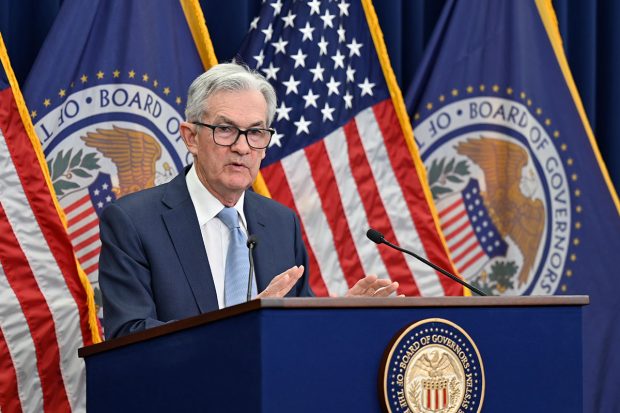
Jerome Powell speaking a news conference Wednesday, Dec. 14, 2022 (Source: Federal Reserve). Jerome Powell speaking a news conference Wednesday, Dec. 14, 2022 (Source: Federal Reserve).

NAFCU Chief Economist Curt Long said Monday he expects the Fed will hit pause on its 12-month run of interest rate hikes Wednesday to gauge the effects of instability among banks here and abroad.

Long said most economists still expect the Fed will raise rates 25 basis points. “My expectation is the Fed will pause to let the dust settle … given what they’ve seen in the last few weeks,” he said.

What they’ve seen so far are the failures of Silicon Valley Bank and Signature Bank earlier this month, the instability at First Republic Bank of San Francisco and Sunday’s proposed buyout of troubled Credit Suisse by another large Swiss bank.

Before those troubles, some economists had predicted the Fed might raise rates as much as 50 basis points, and as recently as March 14, NAFCU economist Noah Yosif predicted the Fed would go ahead with a 25-bps hike in the wake of a report showing only a small drop in the inflation rate in February.

Curt Long Curt Long

Long said if he’s wrong, “a quarter point in one meeting isn’t going to move the needle too much” on the nation’s economy. However, he said, “pushing the pause button at this meeting makes the most sense.”

Sen. Elizabeth Warren (D-Mass.) said on CBS’ “Face the Nation” Sunday that much of the trouble stemmed from a loosening of Dodd-Frank regulations under President Trump. She called on Congress to reinstate those regulations, and for the FDIC to raise its insurance threshold from its current $250,000 per account to perhaps $2 million to $10 million.

Sen. Elizabeth Warren Sen. Elizabeth Warren

”It is one of the options that’s got to be on the table right now,” Warren said. “Small businesses need to be able to count on getting their money to make payroll, to pay the utility bills. Non-profits need to be able to do that. These are not folks who can investigate the safety and soundness of their individual banks. That’s the job the regulators are supposed to do.”

Greg Mesack, NAFCU’s SVP of government affairs, said the trade group would want the threshold for NCUA’s Share Insurance Fund to be the same as the FDIC’s. He said the group is talking to its members about the issue, but doesn’t yet have a number for the amount of an increase, if any, it would support.

Greg Mesack Greg Mesack

Mesack pointed out that 90% of credit union deposits are already under the $250,000 limit, and raising the limit would require credit unions to pay higher fees to support the insurance fund. “Credit unions are safe and sound,” and not facing the same issue as the banks, he said.

Regulators seized control of Silicon Valley Bank of Santa Clara, Calif., March 10, and Signature Bank of New York March 12. Silicon Valley had $209 billion in assets as of Dec. 31, and its loans were concentrated among venture capital funds and technology startups. Signature, which had $110 billion in assets as of Dec. 31, had catered to cryptocurrency companies.

FDIC data showed that 94% of Silicon Valley’s $161.5 billion in deposits was uninsured, and Signature had 90% of its $88.6 billion in deposits uninsured.

In the wake of those failures, the U.S. Treasury Department, the Fed and the FDIC announced March 12 they were covering all deposits at the two banks, including those exceeding the $250,000 limit. Their joint statement said the Fed “will make available additional funding to eligible depository institutions to help assure banks have the ability to meet the needs of all their depositors.”

The banking crisis spread overseas and UBS of Switzerland on Sunday agreed to buy rival Credit Suisse for $3.2 billion. Also Sunday, the Fed along with central banks of Canada, England, Japan, Switzerland and the European Union announced a “coordinated action to enhance the provision of liquidity via the standing U.S. dollar liquidity swap line arrangements.”

Monday started shakily for First Republic Bank of San Francisco. Despite a $30 billion cash infusion from large U.S. banks last week, its stock price fell sharply, and the New York Stock Exchange paused trading several times. First Republic had $212.6 billion in assets as of Dec. 31 and 68% of its $176.4 billion in deposits were uninsured.

Thursday, March 16, 2023

Is a Four-Day Workweek Right for Your Association?


Many organizations are considering moving to a four-day workweek. But how can you implement a flexible work schedule to staff and still provide the same level of service to members? One association shares how it found a balance through iteration and practice.

Rising gas prices after Hurricane Katrina and the 2007 financial recession led CUPA-HR to introduce the shorter workweek into its 2008 summer schedule to better support staff.

“We serve higher education, and since college campuses tend to be quiet during the summer, it made sense to try [the four-day workweek] then,” said Rob Shomaker, senior vice president of CUPA-HR.

Employees enjoyed the shorter schedule. Around 2010, CUPA-HR began experimenting with alternate work schedules during the remainder of the year. This past January, the four-day workweek became permanent.

“We tried it out in the spirit of flexibility and didn’t miss a beat,” Shomaker said.

He shared strategies for implementing a four-day workweek and how associations can create an environment that supports staff but also meets member expectations.

Feedback First

Shomaker said associations that are interested in a four-day workweek should seek frequent feedback from staff and be open to trying multiple iterations before settling on the final strategy.

“If we jumped straight into a year-long four-day workweek, it would have been hard,” he said. “It helped that we were willing to try different things, ask questions, and get honest feedback.”

To get feedback over the years, senior staff have asked supervisors to discuss the four-day workweek in one-on-one meetings with their team members or reached out to staff members themselves. Shomaker recommends trying out some of the suggestions or ideas that staff offer you.

“Getting new ideas and feedback helped us iterate and try new things,” he said. “For example, 10-hour days can be long for some folks, especially if you’ve got family obligations. So, we changed that as part of the summer schedule.” 

Five-Day Flexibility

Building an environment that promotes flexibility for staff and delivers on member expectations is crucial to implementing successful shorter workweek.

“We’ve had to learn [this balance] through iteration,” Shomaker said. “We’re a four-day organization with a five-day operation. We adjust where we need and make sure we give our team members space, so they don’t feel like they need to be strapped to their computers on Fridays.”

Although the CUPA-HR office is closed on Fridays, staff do work if critical issues pop up or if there’s an upcoming conference. The association approaches these situations with transparency, so staff aren’t surprised to work the additional day.

Email communication also makes the shorter workweek a bit easier. “It’s easier to triage issues, and much easier to manage questions via email on a Friday instead of having your phone ring when you’re off or with family,” Shomaker said.

Employee Buy-In

CUPA-HR was able to implement the abbreviated workweek in part because its staff are invested in its success.

“We want our staff to put their best effort forward and be able to live their lives,” Shomaker said. “You want to give your employees autonomy in this process while also being clear with your objectives.”

In his experience, Shomaker found that when employees are invested in the four-day workweek, they are more willing to work a full week when necessary to ensure everything runs smoothly.

“This approach is a way to help you take care of your team and still deliver value to members,” Shomaker said. “If your association has the capacity to incorporate a flexible schedule, I recommend giving it a try.”

Hannah Carvalho

By Hannah Carvalho

Hannah Carvalho is Senior Editor at Associations Now. MORE

Wednesday, March 15, 2023

The New Threat to All FIs: The ‘Twitter-Fueled’ Deposit Run - The “silent run” on deposits!

03/14/2023 

SANTA CLARA, Calif.–The recent failures of two large banks has made clear there is a new threat to financial institutions of all types—the “silent run” on deposits.

As a number of analysts have made clear, including one person who shared thoughts with CUToday.info, while rising rates and mismatched investment portfolios are commonly cited as the reasons for the failure of Silicon Valley Bank, the biggest reason for its downfall was a lack of confidence, which resulted in the run on deposits.

Larry Summers tweet

Former Treasury Secretary Larry Summers’ tweet on what led to collapse of bank.

But while in prior eras “runs” were public and visible to all as lines formed outside bank/S&L branches, the run on Silicon Valley Bank occurred largely online and through mobile devices.

“The massive amount of customer withdrawals that led to the collapse of Silicon Valley Bank had all the hallmarks of an old-fashioned bank run, but with a new twist befitting the primary industry the bank served: much of it unfolded online,” noted CNN. “Customers withdrew $42 billion in a single day last week from Silicon Valley Bank, leaving the bank with $1 billion in negative cash balance, the company said in a regulatory filing. The staggering withdrawals unfolded at a speed enabled by digital banking and were likely fueled in part by viral panic spreading on social media platforms.”
The Wall Street Journal added that reportedly the panic was also taking place in private chat groups. 

‘Twitter-Fueled Bank Run’

“In the day leading up to the bank’s collapse, multiple prominent venture capitalists took to Twitter in particular, and used their large platforms to raise alarms about the situation, sometimes typing in all caps,” the Journal report stated, adding that some tech company founders and CEOs then shared tweets about the concerning situation at the bank in private Slack channels.

Meanwhile, reported CNN, “On the other side of a screen, startup leaders raced to withdraw funds online – so many, in fact, that some told CNN the online system appeared to go down. Still, the end result was a modern race to withdraw funds, which House Financial Services Chair Patrick McHenry later described in a statement as  ‘the first Twitter fueled bank run’.”

‘So Destabilizing’

Ben Thompson, an analyst who tracks the tech industry, wrote in a post earlier this week, “What made the Silicon Valley Bank run unique was (1) the ease with which its customers could execute withdrawals and (2) the speed with which news of Silicon Valley Bank’s impending demise spread. It was the speed, fueled by zero distribution costs for both rumors and withdrawals, that was so destabilizing.”

The irony, of course, was that it was the same Silicon Valley companies whose deposits were at risk that created much of the technology that aided the silent bank run.

5 Things We’ve Already Learned From the SVB Bank Run - Why Congress and regulators "need to take a holistic view of what’s wrong with our banking system."

 3D Isometric Flat Conceptual Illustration of Chasing Money, People are Fighting for the Banknote Giving Them by a Big Hand. Source: AdobeStock.

Although we are still feeling the aftershocks caused by the sudden collapse of Silicon Valley Bank in California and Signature Bank in New York, there are already lessons to learn and questions to ask as we deal with another increasingly common financial surprise.

1. Borrowing Facility Extended to Credit Unions

On Sunday evening, the Federal Reserve and the FDIC announced the creation of a new program that will allow both banks and credit unions to borrow against the par value of their investments for a period of up to one year. While the NCUA has been noticeably quiet, it’s important to know that credit unions are also eligible to participate in this program, which is apparently designed to enable financial institutions to sell collateral at a discount to meet a sudden run on deposits. Hopefully, few if any credit unions will need this help.

2. Let’s Make the Central Liquidity Fund Changes Permanent

Chairman Harper has told anyone who will listen that Congress should pass legislation making permanent recently expired changes to the NCUA’s Central Liquidity Facility. These changes made it easier for credit unions to get loans in times of economic stress and increased the amount of money that was available to help the industry. The events of the last few days have underscored that there is no good reason to deny a mature industry the ability to react to the unexpected.

3. NCUA’s Caution on Crypto Vindicated

I’ve said it before and I’ll say it again, the NCUA was right to take such a cautious approach when it came to permitting credit unions to provide services to the crypto industry.

4. Put Electronic Brakes on Bank Runs?

Whenever I think of bank runs, I think of the scene in “It’s a Wonderful Life” when Jimmy Stewart spots a crowd running toward the Bailey Saving and Loan, just as poor Jimmy and his saintly wife Donna Reed are about to leave on their honeymoon. In contrast, the modern bank run is epitomized by crashing computer networks as businesses go online to pull their funds from their accounts. What SVB’s demise has demonstrated is that modern bank runs are even quicker and more dramatic than their counterparts of the last century. We may need to consider putting automatic brakes on deposit withdrawals, the same way Wall Street automatically blocks trading if certain thresh holds are reached.

5. Who Elected the Federal Reserve?

In 1913, the Federal Reserve System was created with the esoteric but important goal of maximizing long-term economic growth by ensuring that there is adequate liquidity in the economy in times of stress. In contrast, the Fed is increasingly using its extraordinary powers in response to any economic downturn, irrespective of its severity. When the dust settles is it time to update this model? Simply put, if the American financial system is so fragile that it has to respond with emergency measures caused by the conservatorship of a large regional bank, then we need to take a holistic view of what’s wrong with our banking system as a whole. It’s bad enough that the largest banks are too big to fail, now we know that even smaller banks are too big to fail as well. Why does this matter? Because if your average consumer gets foreclosed on if he doesn’t pay his mortgage on time while some of the wealthiest people in America have the government rush in to protect their savings, then there is a question of fairness, which will only make it more difficult for people to believe in our government and economic system.

Henry Meier Henry Meier, Esq.

Henry Meier is the former General Counsel of the New York Credit Union Association, where he authored the popular New York State of Mind blog. He now provides legal advice to credit unions on a broad range of legal, regulatory and legislative issues. He can be reached at (518) 223-5126 or via email at henrymeieresq@outlook.com.

We Have Been Fighting the Wrong Competitor

We Have Been Fighting the Wrong Competitor   Becky Reed — Featured Speaker at NCOFCU 2026 We are pleased to...